

Poolie Team: Oct 23, 2026
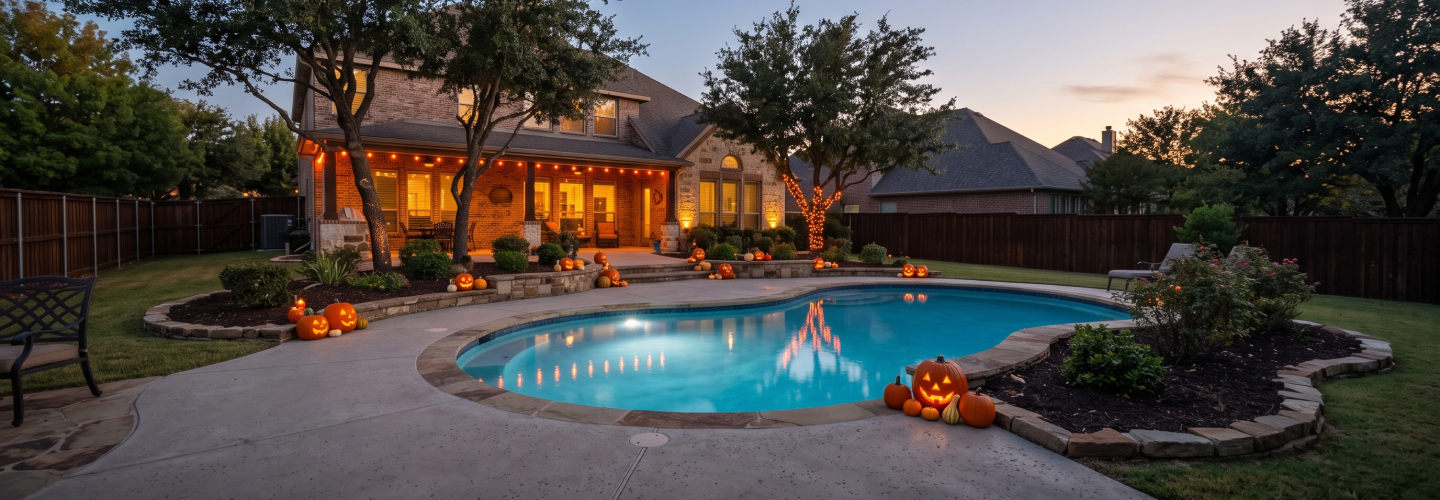
Halloween swimming pool safety starts with keeping trick-or-treaters away from the water, even when nobody plans to swim. Before visitors arrive, check your gates, adjust lights that shine into walking paths, and move decorations and extension cords out of the way.
These swimming pool safety tips walk you through your yard at dusk so you can spot hazards before Halloween night.
The Hidden Risks of a Halloween Swimming Pool in Texas
Your pool can be a danger even if no one is planning to swim. An open gate or an unsecured route through the backyard can let a child reach the water unnoticed. Before Halloween, check how someone could get from your front walkway to the pool area.
On Halloween, your front yard may have more foot traffic than usual. Masks and poorly positioned wigs can limit what children see, while excitement can distract them from where they’re walking. A child who leaves the front walkway or slips through an open side gate may not notice the pool ahead.
According to the CDC, drowning is the leading cause of death for children ages 1 to 4 in the United States. For children ages 5 to 14, it is the second leading cause of unintentional injury death. Securing access to the pool matters even when no swimming is planned.
Your Halloween Swimming Pool Safety Walkthrough
Set aside about 15 minutes at dusk a day or two before Halloween for an initial check. Start at the sidewalk, follow the route to your candy station, and then inspect each possible route toward the pool. Allow extra time to fix anything you find.
Step 1: Secure the Pool Fence and Side Gates
First, check your pool gate. It has to close properly and latch without you helping it close. If it’s not closing and latching as it should, you will need to adjust your gate before Halloween. A working self-closing, self-latching gate is an important layer of pool safety for kids.
After checking your pool gate, check any side or driveway gates that lead toward the pool. Make sure they close securely using appropriate gate hardware. Don’t use zip ties as a substitute for a working latch or lock, and keep required emergency exits usable.
Walk along the pool fence and look for loose sections, gaps, or decorations that interfere with the gate. Move furniture and climbable props away from the fence. Keep your candy station and visitor route outside the pool enclosure.
Having a fence that surrounds your pool and keeps it separated from your home is important. According to the American Red Cross, a four-sided fence that fully surrounds your pool and separates it from the rest of your yard reduces a child’s risk of drowning by 83% compared to a three-sided fence that uses the house as one wall.
Step 2: Manage Blinding Spotlight Glare and Optimize Visibility
Lighting needs a little extra attention on Halloween. You want enough light that the pool edge is clearly visible from a distance, but you also want to avoid the kind of intense, unshielded lighting that creates glare that makes nearby hazards harder to see.
If your pool is uncovered and its installed lights are working properly, turn them on during your check to assess visibility. Check the walking routes separately; underwater lights do not light every step or obstacle outside the pool. Keep the pool enclosure secured regardless of how well it is lit. If an installed pool light flickers or stops working, arrange professional pool light repair before relying on it for nighttime visibility.
Make sure that you do not have any strobe lights or spotlights that are pointed towards your walkway. A bright light shining into someone’s eyes can make nearby steps and obstacles harder to see. This can be dangerous if they are walking near your pool. This is supported by the Illuminating Engineering Society, which defines disability glare as stray light in the eye that reduces image contrast and can reduce visibility and visual performance. When that happens near a pool, someone may not be able to see the water’s edge or nearby hazards clearly. Your goal is to keep walking routes clearly visible without shining bright lights into visitors’ eyes.
Walk the visitor route in both directions with your Halloween decorations switched on. Check from a child’s eye level, too. Reposition any spotlight that shines directly into the path, and keep fog effects away from steps, gates, and walking surfaces.
Step 3: Eliminate Trip Hazards and Temporary Holiday Extension Cords
Walk around your yard and look for anything that could be a tripping hazard. Inspect where a child would walk and what they may trip over.
Common trip hazards to move before Halloween night:
- Pumpkins placed along walkway edges or near pool decking
- Plastic skeletons, tombstones, or yard signs staked close to foot traffic areas
- Loose patio furniture that’s been shifted out of its usual spot for decorating
- Wet or slippery surfaces from rain, sprinklers, or pool use
Check for raised or uneven sections of decking, too. Keep visitors away from damaged areas and arrange an assessment for pool deck repairs if needed.
Temporary extension cords can be easy to miss in the dark. Check for cords lying across walkways, near steps, or where visitors may cut across the lawn.
Reroute cords away from walking routes and the pool. If a crossing cannot be avoided, use an outdoor cable protector designed for pedestrian traffic and check that it does not create a raised trip hazard. Don’t run cords through gates where they could be pinched or prevent the gate from closing.
Use outdoor-rated cords and decorations, and plug them into outlets protected by a ground-fault circuit interrupter (GFCI), which helps protect against electric shock. Keep cords and connections away from water, and follow the manufacturer’s instructions. The U.S. Consumer Product Safety Commission also recommends using outdoor decorations and lights approved for outdoor use and connecting them to a GFCI-protected receptacle or portable GFCI.
Quick-Reference Checklist to Keep Your Halloween Swimming Pool Secure
Run through this list before trick-or-treaters arrive, then check the lighting again after dark. Recheck any gate or decoration that gets moved during the evening.
- Pool gate tested: closes and latches completely without assistance
- Side and driveway gates secured with appropriate hardware; required emergency exits remain usable
- For an uncovered pool, working installed lights checked for visibility
- Visitor routes and steps clearly lit without glare
- Strobe and spotlight effects angled away from eye level and walking paths
- Cords kept away from water and walking routes; unavoidable crossings protected with suitable outdoor cable protectors
- Pumpkins, yard signs, and decorations moved away from pool deck and walkway edges
- Loose patio furniture secured or moved indoors
- Any installed pool, door, or gate alarms tested and activated according to the manufacturer’s instructions
- Skimmer poles, nets, and maintenance equipment moved away from visitor routes and stored securely. Keep dedicated rescue equipment, such as a reaching pole or life ring if your pool has one, readily accessible rather than locked away.
- Any cover relied on for safety verified against its safety-standard documentation and secured according to the manufacturer’s instructions.
FAQ: Common Backyard and Pool Safety for Kids on Halloween
1) Why should I leave my pool light on if nobody is swimming?
Lighting can make an uncovered pool easier to see after dark, but it does not prevent a child from reaching the water. Keep gates secured and check the surrounding paths for dark spots and glare. Do not rely on a view from inside the house as a substitute for supervision when children are near water.
Lighting is an added visibility measure, not a pool barrier or substitute for a self-closing, self-latching gate.
2) Does a standard winter pool cover keep children out of the water?
Do not assume a winter cover is a safety cover. Check the manufacturer’s documentation for compliance with ASTM F1346 and follow its installation and maintenance instructions. A floating solar blanket or ordinary winter tarp should not be treated as a barrier that keeps children out.
ASTM F1346 establishes performance requirements for safety covers intended to reduce drowning risk by restricting access to the water when the cover is correctly installed and used according to the manufacturer’s instructions. A cover should not be called a safety cover simply because it spans the pool.
If you are unsure what type of cover you have, keep the pool area secured and ask a qualified pool professional to check it. Don’t remove a cover solely to make the water visible.
3) What should I do if a neighbor’s child wanders into my restricted backyard area?
Immediately make sure the child is safely away from the pool and other hazards. Stay with them while you locate their parent, caregiver, or another responsible adult rather than sending a young child away alone.
If the child is missing from view at any point, check the pool and other nearby water first. The American Red Cross specifically recommends checking the water first when a child is missing because drowning can happen quickly and silently.
Once the child is safely back with a responsible adult, inspect your barriers to determine how access occurred. Check the pool gate, side gates, doors, fence openings, and anything nearby that could have been climbed. Correct the access problem before allowing visitors back near that area.
If a child has entered the water or appears to be in distress, treat it as a water emergency. Call 911 when emergency assistance is needed and use water-rescue and CPR skills appropriate to your training.
Get Your Pool Area Ready Before Trick-or-Treaters Arrive
A quick walkthrough can help you spot an open gate, a bright spotlight, or a cord crossing the path before visitors arrive. Fix what you find, keep the candy route away from the pool, and recheck gates if anyone uses them during the evening.
Noticed a problem with your pool lights or equipment during your walkthrough? Contact the Poolie team to discuss the issue and arrange service.


