
Poolie Team: Oct 16, 2026
Your pool can be a magnet for Texas wildlife in October, and you might not realize it until an unexpected visitor shows up.
You step outside on a cool fall morning and find a frog in the skimmer basket, animal tracks along the coping, or another unexpected visitor in the shallow end. When dry conditions reduce natural water sources, wildlife may look for water closer to homes.
By the end of this article, you’ll know which animals you might find in your pool this time of year, why they visit, and what you can do to discourage them.
Which Animals Are Actually Invading Texas Pools in October?
Texas pools can attract frogs, snakes, raccoons, deer, and other wildlife throughout the year. Fall conditions may change animal activity, but there is no reliable statewide rule that October is the peak month for wildlife entering swimming pools. Local rainfall, drought, temperature, habitat, food availability, and nearby development all matter.
Why Frogs and Toads Are the Most Persistent Offenders
The problem is that pool water isn’t an ideal environment for amphibians. According to the National Park Service, amphibians have very permeable skin, which allows chemicals in their surroundings to enter their bodies.
Frogs and toads may also have difficulty climbing back out of pools with steep, smooth walls. If one dies in the water, the main pool-maintenance concern is the same as with other organic material: decomposition adds contaminants and increases the demand placed on the sanitizer and filtration system.
Avoid assuming that a dead frog will specifically raise pH or cause a predictable phosphate spike. The actual effect on water chemistry depends on the size of the animal, pool volume, existing chemistry, circulation, and how long it remains in the water.
A dead animal can also introduce germs, although the CDC notes that most dead animals found in pools do not pose a significant health risk to swimmers when removed and the pool is properly disinfected. Raccoons require special precautions because they can carry Baylisascaris roundworm eggs.
If frogs or toads keep appearing in your pool, nearby insects may be attracting them. Vegetation, moisture, and easy access to the water can also make the pool area appealing.
Why Snakes Follow (and What It Means for Your Backyard)
Snakes sometimes show up around pools because the surrounding yard provides water, prey, shelter, or travel corridors. Frogs, rodents, insects, and other small animals can all contribute to prey availability.
The concern with snakes isn’t just that they’re unsettling to find. According to Texas A&M University’s College of Veterinary Medicine, water moccasins and copperheads are among the four main groups of venomous snakes native to Texas, with water moccasins being semi-aquatic and commonly found near bodies of water.
Most snakes encountered around homes are not venomous, but you should avoid reaching blindly into skimmers, planters, equipment areas, or other concealed spaces where an animal could be hiding. If you see a snake and cannot confidently identify or safely avoid it, keep your distance and contact local animal control or a qualified wildlife professional if removal is necessary.
The Surprise Visitor: Keeping Deer Out of Your Pool
Finding a deer in your pool sounds unlikely until it happens to a neighbor. In Texas Hill Country and suburban areas near greenbelts, white-tailed deer may move through residential areas in search of food, cover, and water. Drought can make dependable water sources more important, but October itself should not be treated as a statewide trigger for deer entering pools.
Texas A&M AgriLife notes that water is an important part of white-tailed deer habitat and that water needs vary with season, temperature, humidity, forage moisture, and drought conditions. Texas Parks and Wildlife similarly notes that natural water sources can become limited during periods of below-average rainfall.
The danger isn’t just the deer getting wet. Hoofed animals may struggle to grip slick pool steps or smooth plaster. If a deer falls in and panics, it may struggle to gain traction and climb out. A large animal can injure itself and may also damage coping, liners, fixtures, or other pool components while trying to escape.
Avoid putting a specific repair cost on that damage because the outcome varies widely with the pool surface and what was damaged.
And rescuing a deer from a pool is not a one-person job. Prevention is significantly easier than the alternative.
Why Wildlife Is Drawn to Your Water (Don’t Ignore It)
Wildlife may approach pools for several reasons: access to water, prey, vegetation, shelter, or simply because the pool lies along an animal’s normal travel route. Dry conditions can increase pressure on natural water sources, but wildlife activity varies greatly across Texas and from one property to another.
Animals can bring dirt, debris, and germs into your pool, including some that can make swimmers sick. How you respond should depend on what entered the pool and whether feces or a dead animal were present.
How to Keep Critters Out of Your Pool
Here are a few practical ways to keep critters out of your pool:
Fencing and Perimeter Gates
Installing a fence is one of the best ways to keep animals out of your pool. Most pool fences are designed to restrict children’s access, but they may not keep wildlife out. Check whether your fence also discourages the wildlife visiting your yard.
Keep gates closed and latched, repair gaps, and avoid leaving pet food, open trash, fallen fruit, or other attractants near the pool area. CDC specifically recommends keeping pool fences closed and removing food sources that may attract raccoons.
Safety Covers
A suitable pool cover can also help keep animals out. There are many different types of pool covers you can install, so choose a cover designed and installed for the purpose you need and follow the manufacturer’s instructions. Do not assume that an ordinary cover is safe for an animal, child, or adult to walk on.
Animals may slip beneath a loose pool cover and become trapped. The U.S. Consumer Product Safety Commission (CPSC) has warned that loose or partially placed solar pool covers create a serious entrapment risk, citing cases where both people and animals have drowned after falling beneath them.
If exclusion is the goal, ask a pool professional about a properly installed safety-cover system appropriate for your pool rather than assuming a standard winter or solar cover will keep wildlife out.
Natural Deterrents and Automated Solutions
Natural deterrents and automated solutions may offer another layer of protection. Focus first on removing what attracts wildlife: food, standing water elsewhere in the yard, dense hiding places, unsecured trash, and easy routes into the pool area.
Do not rely on lemongrass or other home remedies to repel snakes. Extension experts note that snake repellents have not been shown to work consistently, and reducing hiding places and prey is a more reliable approach.
Motion-activated devices may discourage some animals in some settings, but their effectiveness varies and animals can become accustomed to deterrents. Before using any commercial repellent near the pool, follow the label and confirm that it is appropriate around water, people, and pets.
Before using animal repellents near your pool, check the label for application instructions and precautions.
Running the pool pump overnight should not be presented as a wildlife-control method. Circulation may affect where small animals drift after falling in, but there is not good evidence that ordinary pool circulation reliably keeps frogs, raccoons, deer, or snakes from approaching the pool.
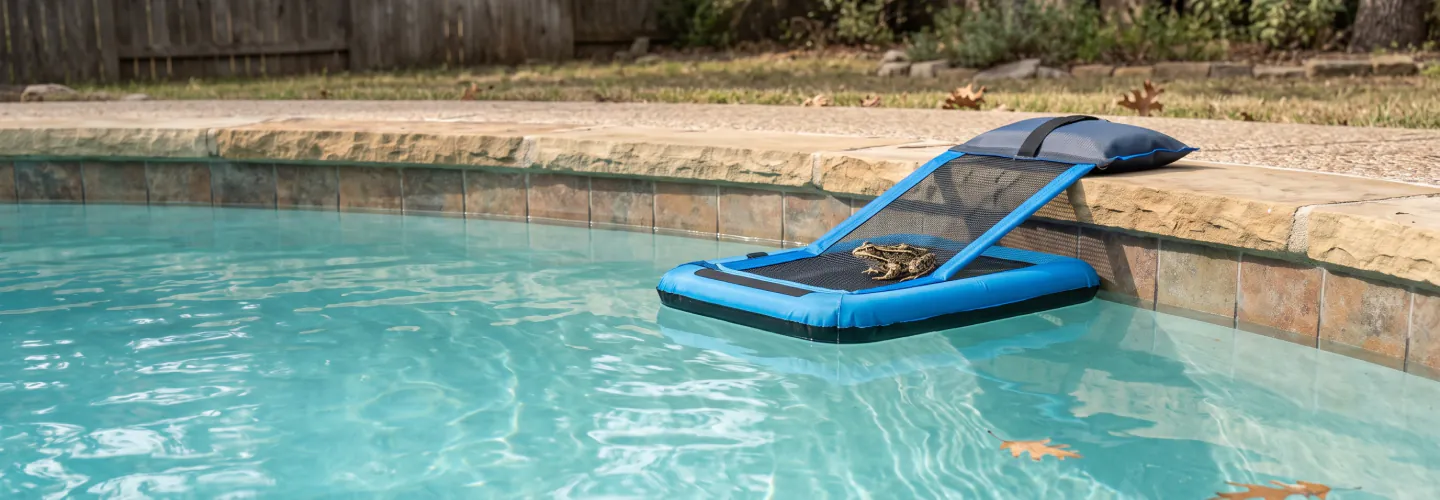
For recurring small-animal problems, consider a purpose-built wildlife escape ramp. These devices provide a climbable exit for frogs and other small animals that fall into a pool and cannot climb a vertical wall.
What to Do If an Animal Gets Trapped
If an animal gets trapped, stay calm. Don’t jump into the pool or rush toward it. Your first move is to stop any noise and movement in the area because a panicked animal in a pool is already stressed, and sudden movement makes it worse.
For small animals like frogs, turtles, or even the occasional opossum, a pool ramp or escape log placed in the water gives them a way out on their own. Use a device designed for this purpose and follow its placement instructions.
For a deer in a pool, do not attempt to remove it yourself. Stand back from the pool and call your local animal control or wildlife removal company. They will have the proper equipment to remove the animal from your pool.
After the animal is removed, do not automatically “shock” the pool without first identifying what happened. CDC guidance varies depending on the type of contamination.
For most dead animals, CDC recommends closing the pool, wearing disposable gloves, removing the animal with a net or bucket, disinfecting the removal tool, and then following the recommended water-disinfection steps. Dead raccoons and raccoon feces need additional precautions because chlorine does not reliably kill Baylisascaris eggs.
If feces are present, follow CDC fecal-contamination guidance rather than guessing at a chlorine dose. Formed stool and diarrheal contamination require different responses.
Frequently Asked Questions
1) Can wild animals make my pool water unsafe to swim in?
Yes. Wild animals can contaminate your pool water. The level of risk depends on the animal and whether feces, a carcass, or other contamination entered the pool.
Close the pool while you remove the contamination and follow the appropriate disinfection guidance before allowing swimmers back in. Do not assume every wildlife incident requires the same chemical treatment.
2) Will running my pool pump overnight keep animals away?
There isn’t good evidence that normal pool circulation reliably deters wildlife from approaching or entering the water. A running pump may change surface movement and move small debris or animals toward the skimmer, but it should not replace fencing, removal of attractants, or escape devices for small wildlife.
3) Does pool chlorine naturally repel frogs and snakes?
No. Pool chlorine doesn’t naturally repel frogs and snakes. Some people assume the smell of chlorine keeps these animals away. Animals may still approach or enter a properly chlorinated pool.
4) What should I do if a deer is stuck in my pool?
If you have a deer stuck in your pool, make sure to keep everyone away from the pool. Don’t try to guide the deer out yourself; hooves and panic are a dangerous combination. Keep the surrounding area as quiet as possible to reduce the animal’s stress, and call local animal control or a wildlife rescue service right away. They have the tools to handle this safely for both you and the animal.
5) What should I do if I find a raccoon or raccoon feces in my pool?
Close the pool immediately and avoid direct contact. CDC warns that raccoon feces can contain Baylisascaris roundworm eggs, which ordinary pool-chlorine levels do not reliably kill. Use disposable gloves and a net or other tool for removal, contact local animal control if appropriate, and follow CDC’s raccoon-specific filtration and cleanup recommendations before reopening the pool.
Enjoy a Clean, Critter-Free Pool This Autumn
Fall can bring changes in wildlife behavior, weather, food availability, and water availability, but there is no single October pattern that applies to every Texas pool. The best prevention strategy is to make the pool area less attractive and easier for animals to avoid or escape.
Keep gates secure, remove food and shelter that attract wildlife, consider an appropriate cover where practical, and give small animals a safe escape route if they frequently fall into the water.
After an animal-in-pool situation, your water chemistry and sanitation response should match the type of contamination rather than defaulting to a generic shock treatment.
If you’re dealing with recurring wildlife issues, equipment damage from trapped animals, or you just want someone to check your pool’s condition heading into fall, reach out to Poolie and our team can help you. From weekly maintenance to repair services, we keep Texas pools clean, balanced, and ready to use without the October surprises. Fill out the form below to get started.


