

Poolie Team: Oct 07, 2026
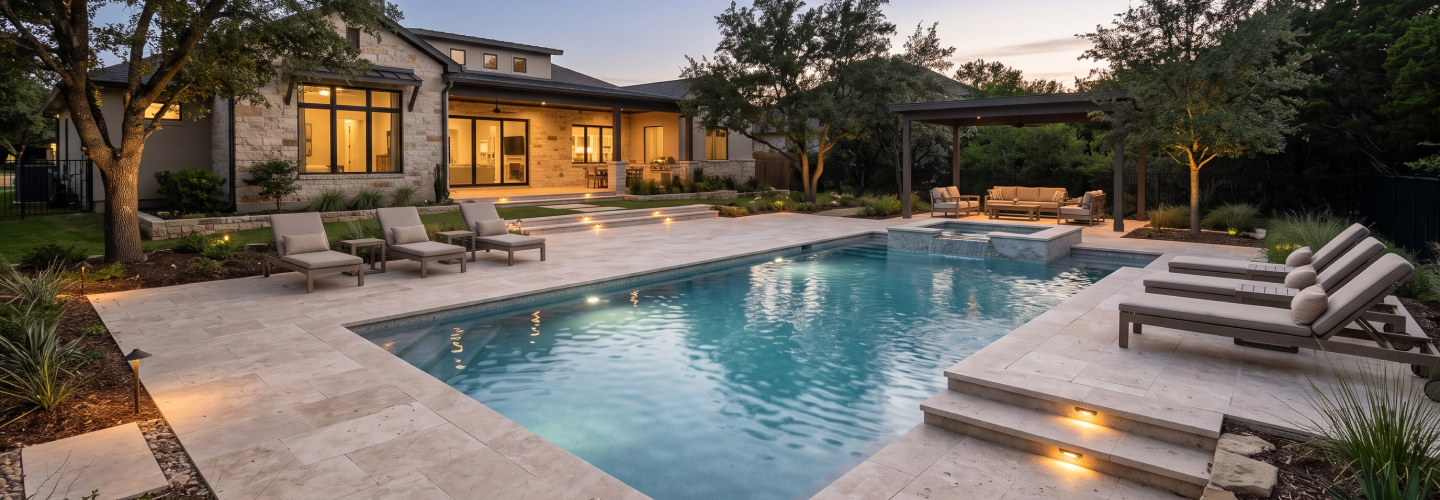
If you’ve stepped onto your pool deck after a hot Texas day and discovered that your deck is too hot to walk on, you know that sunset doesn’t always bring immediate relief. If you’re planning a pool deck renovation, consider how the surface will feel and look when your family actually uses it. Your family likely uses the pool at other times of day, including after dinner and when it is cooler outside, and when the pool lights are on.
This article looks at pool deck materials, lighting, furniture, and landscaping choices that can help create a more comfortable and functional outdoor space after dark.
Top Swimming Pool Decking Options for Evening Comfort
When comparing swimming pool decking options, consider how each surface feels and looks at the time you usually head outside. Heat retention, wet traction, and glare can all affect evening comfort.
Concrete vs. Pavers: Which Performs Better After Sunset
Poured concrete is a popular pool deck material in Texas because it is versatile, widely available, and can be finished in many colors and textures. Like other outdoor surfaces, however, concrete can become very hot in direct sun. Color, finish, shading, slab characteristics, and weather conditions all affect how much heat it absorbs and how quickly it cools after sunset.
Pavers can also heat up in direct sun, so they should not automatically be assumed to stay cooler than poured concrete. Lighter colors generally absorb less solar energy than comparable darker surfaces, and the specific material matters as well. Properly installed interlocking pavers can accommodate limited ground movement through their joints, while poured concrete is more rigid and may develop visible cracks as the underlying soil moves. Pavers can still settle or become uneven, so a well-prepared base and proper drainage are important.
Under evening lighting, their defined pattern can add visual structure to the deck, but joints and changes in level should remain clearly visible.
Natural Stone Finishes That Create a Resort-Like Feel
Travertine and flagstone can bring a natural look to Texas pool decks, with colors and textures that add character under evening lighting. How comfortable they feel underfoot depends on the specific stone, finish, and sun exposure. For poolside use, choose a finish suited to wet, barefoot traffic, and ask how any sealer may affect traction. Clearly lit edges and steps are especially important after sunset.
Under pool and landscape lighting, the natural variation in stone can create distinctive patterns of color, texture, shadow, and reflection. Natural stone may also require more material-specific care than some manufactured alternatives. Depending on the stone, installation, and exposure, maintenance may include appropriate cleaning and periodic sealing when recommended by the stone or sealer manufacturer. Consider those long-term requirements when comparing materials rather than looking at installation cost alone.
Wood and Composite Swimming Pool Decking Options: Warmth Without the Upkeep
Wood and composite decking create a different look and feel from concrete, pavers, or stone, but neither material should be assumed to stay cool simply because it is decking. Surface temperature depends on factors such as material composition, color, direct sun exposure, and whether the product incorporates heat-mitigating technology.
Natural Wood
Natural wood provides grain, texture, and warmth that manufactured decking is designed to imitate. Its maintenance needs vary by wood species, finish, climate, exposure, and the appearance you want to preserve.
Instead of assuming every wood deck must be stained or sealed once a year, follow the coating or finish manufacturer’s recommended maintenance schedule. Regular cleaning and timely refinishing can help protect the surface, while neglected or poorly detailed wood can develop discoloration, checking, splitting, decay, or dimensional movement over time.
Composite Decking
Composite decking offers a similar look and feel to natural wood but requires less maintenance. Benefits of composite decking include resistance to moisture and splintering and easy cleaning. Product performance varies, though, so compare the manufacturer’s recommendations for wet traction, heat, fading, expansion, cleaning, and poolside use rather than relying on texture alone.
What to Know About Composite Decking in Texas Heat
Dark composite decking can get quite hot in the Texas heat. There is no reliable universal time, such as 8 p.m., when a dark composite deck can be expected to become comfortable. How quickly it cools depends on the product, color, air temperature, direct sun exposure, shade, wind, and other site conditions.
Color can make a meaningful difference. Major composite-decking manufacturers caution that darker colors generally feel hotter in direct sun and often recommend lighter colors or products with heat-mitigating technology for hotter climates. Even those products can still become hot during intense sun exposure.
Proper installation matters with composite decking, especially in Texas heat. Boards need room to expand and contract as temperatures change, so spacing and fastening should follow the manufacturer’s instructions for the specific product. Incorrect gaps or fasteners can contribute to buckling and other movement-related damage over time.
How Heat Retention and Light Affect Your Pool Deck Ideas
When selecting a pool deck, think about how the material will perform as well as how it will look. Color, finish, shade, thermal properties, and lighting can all affect how comfortable and visible the deck feels after dark.
Surface Temperature: Finding the Right Balance After Dark
You want a surface that is not too hot to walk on at noon in the summer but is pleasant to walk on at 9 p.m. in the fall. No single material can guarantee both conditions because surface temperature changes with weather, color, exposure, and the specific product. A few general principles can still help:
- Lighter-colored materials generally absorb less solar energy than comparable darker materials, although the specific stone, paver, or decking product still matters.
- Composite and PVC decking can become hot in direct sun, particularly in darker colors. Some manufacturers now offer heat-mitigating product lines.
- Poured concrete can also remain warm after a sunny day, with color, finish, slab characteristics, and site conditions affecting its temperature.
- Dark-colored outdoor surfaces generally absorb more solar energy and may remain uncomfortable into the evening after prolonged sun exposure.
Instead of choosing a material because it is expected to remain warm on cooler evenings, prioritize daytime comfort, traction, durability, and appearance. If extending the swimming season is the goal, pool-water heating or other purpose-built heating options are more relevant than relying on heat stored in the deck.
Finish and Color Choices That Work Under Pool Lighting
Glossy or highly reflective sealers can create noticeable reflections or bright spots under some outdoor lighting conditions. Around a pool, also confirm that any sealer or coating is appropriate for wet pedestrian areas and does not create an unacceptable loss of traction.
Matte and lower-sheen finishes often produce less noticeable glare. For color, consider how the deck will interact with both daylight and your planned nighttime lighting rather than trying to match a particular deck color to a particular light color. Warm-white landscape lighting around 2700K to 3000K can create a softer appearance, but the best combination depends on the material, architecture, and surrounding finishes.
Before choosing a finish, compare samples under your planned pool lighting to see how reflections, colors, and step edges appear after dark.
Enhancing Your Space With Evening Pool Deck Furniture and Layouts
Good furniture and other design elements for a pool deck can make it an attractive place to gather in the evening. Keep circulation routes clear enough for people to comfortably move between the house, seating areas, pool entries, gates, and other frequently used spaces after dark. Furniture placement should not create obstacles or obscure changes in elevation.
Choosing Weatherproof Pool Deck Furniture for Nighttime Lounging
Poolside furniture is exposed to moisture, UV radiation, weather, sunscreen, and occasional chlorinated or saltwater splash. Choose materials and fabrics designed for outdoor use and follow the manufacturer’s care instructions.
Consider the following features when selecting furniture for frequent evening use on a deck:
- Mesh or sling seating: dries quickly after a splash and allows water to drain rather than remaining trapped in cushions
- Outdoor-performance upholstery: look for fabrics designed to resist moisture, mildew, fading, and UV exposure
- Aluminum or other outdoor-rated frames: can offer corrosion resistance and lower maintenance when the alloy, finish, hardware, and construction are appropriate for the environment
Multi-purpose items can be useful at night. Storage ottomans provide easy access to towels without taking up extra space. Modular seating can also make it easier to adjust the layout for dining, conversation, or lounging without moving large pieces of furniture through dark walkways.
Wet Traction: Keeping Foot Traffic Safe When Visibility Is Lower
Pool edges, steps, and changes in elevation deserve particular attention because these areas are frequently wet. Choose surfaces intended for the expected wet and barefoot conditions, keep them clean, and provide enough lighting for edges and elevation changes to remain visible after dark.
For sealed concrete, a compatible slip-resistant additive can help improve traction when the surface is wet. For natural stone, ask your installer which treatments suit the specific stone and finish. Pay particular attention to step treads and areas around the pool edge, and keep these surfaces clean and well maintained to reduce slip risks.
Traction should be considered during the original material and finish selection rather than treated only as a corrective measure after the deck is in use.
Lighting and Landscaping Around Your Pool Deck for Ambiance
Good lighting and landscaping features around your pool deck can enhance safety and usefulness of the outdoor space at night. The benefits of lighting and landscaping complement each other. Outdoor lighting helps people see the pool deck, and landscaping helps frame views. Neither can fully replace the other. Poor or lack of landscaping won’t be made up for by good lighting, and good landscaping won’t help if the lighting is poor. Consider both elements together.
Lighting Placement That Makes Your Deck Functional, Not Just Decorative
Steps, paths, and changes in elevation should remain clearly visible after dark. Exact lighting requirements depend on the project, property type, and locally adopted codes, so it is better not to assume that one particular fixture type is universally required. Recessed, riser-mounted, or other appropriately rated fixtures can provide useful illumination without placing bulky fixtures directly in walking paths.
Downlighting from an appropriate overhead location can create softer, more distributed illumination than a single bright floodlight. Fixtures mounted in or near trees require careful planning so that installation does not damage the tree and the light can be safely accessed and maintained.
Aim and shield outdoor fixtures so light falls where it’s needed without shining directly into swimmers’ or seated guests’ eyes. These principles for responsible outdoor lighting emphasize targeted illumination and appropriate brightness. Around the deck, check that walking routes and changes in level remain clearly visible.
Night-Blooming Plants and Features That Work After Dark
Plants that flower or release fragrance in the evening can add another layer to a nighttime pool design.
Moonflowers open in the evening, while certain jasmine species and cultivars are known for strong evening fragrance. Before planting, confirm that the specific plant is appropriate for your climate and property, particularly where children or pets may have access to it.
Select low-maintenance plants near the deck. Trees and shrubs that regularly drop leaves, flowers, fruit, or other debris directly over the pool can increase cleaning demands and may leave material on wet walking surfaces. Position larger or higher-shedding plants far enough from the water to simplify maintenance while still using them to frame views or support landscape lighting.
A small water feature, such as an aerator, a waterfall at one end of the pool, or a freestanding fountain, provides background sounds in outdoor areas that can help soften or partially mask nearby environmental noise. The effect depends on the water feature and the type and volume of the surrounding sound, so it should not be treated as complete soundproofing.
Above-Ground vs. In-Ground Pool Decks: Nighttime Differences
Above-ground and in-ground pool deck areas have different nighttime issues. It’s important to address them separately rather than assuming they are similar issues.
Above-ground decks can create shadows beneath stairs, platforms, and railings that are not present in the same way around a typical in-ground pool. Lighting beneath railings, along stairs, or in other appropriate locations can help make walking surfaces and elevation changes easier to see.
Privacy is another potential issue with above-ground decks. You may have more visibility into adjacent yards from an above-ground deck than you would from an in-ground pool deck. Consider using large planters or evergreen landscaping to block some views while maintaining ventilation.
FAQs About Swimming Pool Decking Options
1) Which swimming pool decking options stay cool by day but warm by night?
No pool-deck material reliably stays cool in intense daytime sun while also remaining warm at night. Surface temperature depends on material, color, shade, weather, and exposure. In general, lighter colors tend to absorb less solar energy than comparable darker surfaces, which can help with daytime comfort.
Travertine, concrete pavers, porcelain pavers, wood, and composite products can all be appropriate around a pool when the specific product is suitable for wet conditions. Compare actual samples in sun whenever possible, and review manufacturer data rather than assuming all products within one material category perform the same way.
2) What does it cost to retrofit an existing deck with lighting or new pool deck ideas?
Costs vary too widely by location, deck construction, electrical access, fixture type, demolition requirements, and project scope to give a reliable universal price range. A straightforward landscape-lighting addition can be very different from a project that requires cutting or drilling concrete, adding circuits, relocating equipment, or modifying an existing pool electrical system.
Ask a qualified contractor for a site-specific estimate, and make sure any electrical work in or near the pool is performed by professionals qualified for that work and complies with applicable local requirements.
3) How long does a new deck installation take before you can host an evening gathering?
It depends on the material. A dry-laid paver surface may be ready for normal pedestrian use once installation, compaction, jointing, and any required finishing steps are complete. Wood and composite decks can generally be used after the structure and decking have been fully installed and the contractor has cleared the project for use.
Concrete is different because it gains strength gradually. Many conventional concrete mixtures reach their specified design strength at around 28 days, but that does not mean every slab must remain completely unused for 28 days. The appropriate time for foot traffic, furniture, or heavier loads depends on the concrete mixture, curing conditions, finish, weather, and contractor or product guidance.
Follow the installer’s instructions before placing furniture or hosting a gathering on any newly completed deck.
Choosing the Best Pool Deck Options for Evening Use
Evening comfort comes from several design decisions working together rather than one material choice. Decking, lighting, furniture placement, landscaping, drainage, traction, and circulation all influence how comfortable the area feels after sunset.
When you’re talking to a contractor or planning a renovation, ask how each pool deck option performs for heat retention and traction after dark, not just daytime appearance. Ask for lighting to be included in the initial scope rather than added on later as an afterthought. And if you’re not sure where to start, Poolie’s team can evaluate your existing setup and help identify opportunities to improve the surface, lighting, and overall layout together. Reach out to Poolie or fill out the form below to get started.


