

Poolie Team: Sep 24, 2026
Off-season pool maintenance can be the difference between a quiet, well-protected pool and one that heads into spring with unexpected problems. Swimming slows in the colder months, but your pool still needs attention. Deferred fixes can turn into more complicated pool repairs by the time spring arrives.
This guide walks you through the small issues worth watching this fall, why they can grow when ignored, and how you can stay ahead of the spring rush.
Why Off-Season Pool Maintenance Matters
Off-season pool maintenance matters because long periods of reduced use can still affect your pool’s mechanical systems and water chemistry.
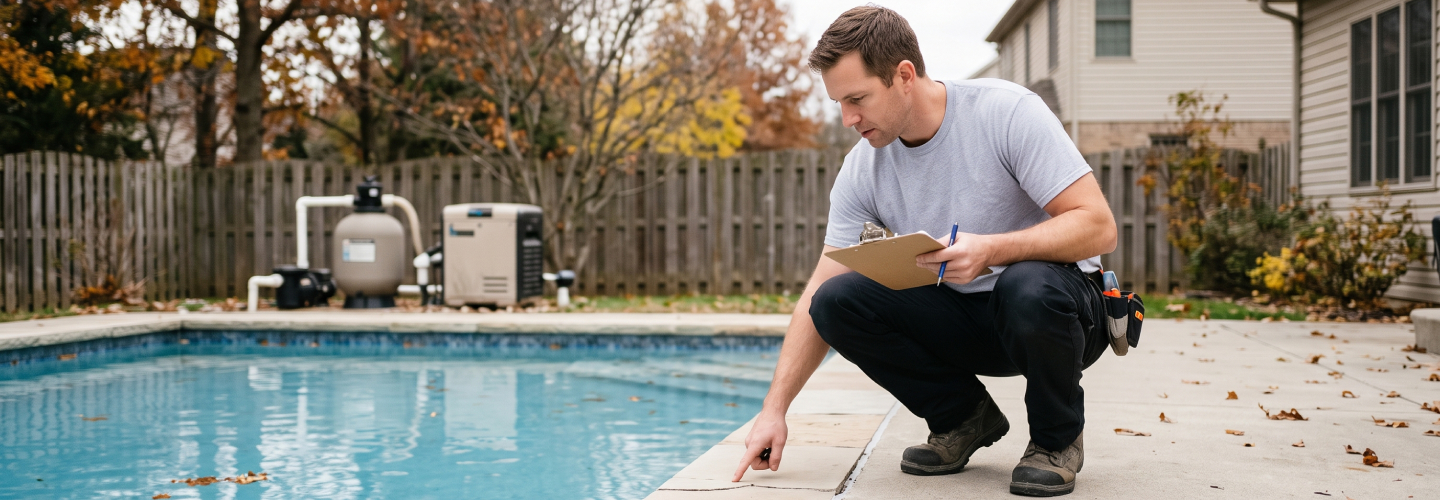
Changes in circulation, shifting temperatures, debris, and less frequent monitoring can all create conditions where small problems go unnoticed. A small problem that could easily be fixed in November can become a much larger repair by spring, particularly if it continues developing for months. That’s why a little periodic visual monitoring goes a long way. Walking your pool area every couple of weeks and catching anything out of place can help protect one of your backyard’s biggest investments.
5 Minor Pool Issues That Can Progress Over Winter
There are five minor pool issues that tend to worsen quietly over the off-season if nobody’s paying attention. Here’s what to watch for:
A. Pinhole Leaks and Structural Shifts
A small plumbing leak, crack, or liner opening can become a larger problem if it’s left unaddressed. Ground movement, pressure changes, and, in freeze-prone areas, repeated freeze-thaw cycles can contribute to further damage. Research on concrete has shown that repeated freeze-thaw cycles can contribute to cracking and deterioration, particularly when moisture enters the material before freezing. While Texas pools may not experience prolonged freezing conditions every winter, an existing crack or vulnerable area is still worth addressing before freezing weather arrives. Watch for an unexplained drop in water level, consistently wet areas near the pool, or other signs that water may be escaping.
If you notice a noticeable or persistent drop in water level that can’t be explained by evaporation, rainfall, or maintenance, it’s worth investigating. Catching a leak early can help a technician identify the source before additional damage develops. Depending on the cause, the repair may be as simple as addressing a localized leak or may require more extensive work.
B. Idle Equipment Vulnerabilities
If water is left sitting in equipment or plumbing, especially when freezing temperatures are possible, the equipment can be vulnerable to damage. Seals, O-rings, and gaskets can also deteriorate with age, heat, chemicals, and normal wear. Seals and O-rings can deteriorate over time from age, heat, chemicals, and normal wear. Follow the equipment manufacturer’s maintenance instructions for inspection and lubrication rather than assuming every seal needs to be lubricated during the off-season. Look for mineral buildup around the fittings, a slow drip coming from the equipment pad, or unusual sounds when the system is running. This is especially worth watching on older equipment, where seals and gaskets may have already experienced years of heat, chemical exposure, and normal wear.
Inspecting equipment, addressing worn seals or gaskets, and taking appropriate freeze-protection or winterization steps when freezing temperatures are expected can help prevent minor issues from becoming larger equipment failures.
C. Minor Surface and Tile Blemishes
A small plaster chip, surface defect, or patch of localized scaling can become more difficult to address when water chemistry remains out of balance. Rough texture along your pool steps or loose grout debris settling on the pool floor are early warning signs.
When they’re left unaddressed, water can penetrate small openings, and freezing conditions may worsen certain cracks or damaged areas. Addressing a localized repair and correcting water balance early can help prevent the problem from becoming more extensive.
D. Reduced Circulation and Stagnant Dead Zones
To save money on your electric bill, you might be tempted to reduce pump run time as the weather cools. Pump schedules can often be adjusted seasonally, but cutting circulation too far can reduce filtration and sanitizer distribution, allowing debris and contaminants to accumulate in areas with weaker circulation. Check for discoloration and debris accumulation in the deep end, on the bottom steps, or around a spa overflow. Areas with weaker circulation, including some locations farther from return jets, may be more prone to collecting debris and developing water-quality problems.
Adjusting pump run times to match your pool’s circulation needs and brushing areas with weaker circulation can help keep water moving and debris from settling.
E. Unbalanced Off-Season Water Chemistry
Rain and other environmental factors can dilute pool chemicals and shift your water chemistry during the off-season. Organic debris can also increase sanitizer demand. If water chemistry moves outside the appropriate range, the water can become more corrosive or scale-forming, potentially affecting pool surfaces and equipment over time. The CDC’s Model Aquatic Health Code describes water balance as the tendency of water either to corrode surfaces or deposit mineral scale, with factors including pH, alkalinity, calcium hardness, dissolved solids, and temperature. Cloudiness, staining, visible algae, or other changes in water appearance are signals worth investigating. Even under a cover, water chemistry can change because of dilution, debris, temperature changes, and reduced maintenance.
Regular testing and appropriate chemical adjustments throughout the off-season can help protect your pool’s surfaces and equipment from corrosion, scaling, and other water-balance problems.
The Fall Advantage: Proactive Diagnostics and Repairs
The fall advantage comes down to addressing repairs before colder weather and the spring service rush arrive.
Moderate temperatures can make some repair and renovation work easier to schedule and complete, but curing requirements vary by material and manufacturer. Scheduling service before the spring rush may also give you more flexibility around appointments, parts, and project timing.
Tackling Common Pool Repairs Ahead of the Spring Rush
Common pool repairs can be easier to plan when you’re not racing the calendar. Replacing a failed pump motor or addressing a cracked skimmer throat in the fall can be easier to plan before spring demand increases. Waiting until peak spring demand may make scheduling more difficult, particularly if parts or specialized service are required.
Addressing repairs during the off-season can make it easier to budget for the work, plan around your schedule, and complete repairs before demand increases in spring.
The 5-Point Fall Inspection Checklist
- Clear all pump, skimmer, and inline baskets of compacted organic debris.
- Test and balance the water according to your pool’s needs before reducing maintenance or covering the pool.
- If your pool uses a safety cover, make sure it is installed and maintained according to the manufacturer’s instructions and kept free of excessive debris or standing water.
- Inspect visible pool light areas for signs of cracking, water intrusion, or other damage, and have electrical issues evaluated by a qualified professional.
- Walk your equipment pad and inspect all visible plumbing lines for slow, active drips.
Best Practices to Protect Your Investment This Off-Season
The best practices for protecting your investment this off-season come down to a few consistent habits that catch problems while they’re still small and manageable.
1) Establish a Routine
A quick walk-through of your pool area every couple of weeks can help you spot problems before they have time to compound. Keep a quick note of what you see each time, even something as simple as a phone photo, since comparing conditions over a few weeks makes gradual changes far easier to spot than relying on your memory alone.
2) Protect the Barriers
Keep your pool cover free of excessive debris and standing water according to the cover manufacturer’s maintenance instructions. Excessive standing water and debris can place additional weight and stress on some pool-cover systems. Follow the cover manufacturer’s instructions for removing water and debris safely. Addressing accumulated water and debris can help reduce unnecessary stress on the cover and its anchoring system.
3) Know When to Delegate
Basic skimming and routine water testing are tasks many homeowners can handle themselves. For anything more involved, such as pressure testing, equipment repairs, or full winterization, bringing in a qualified pool professional can help ensure the work is handled correctly and safely.
Protect Your Investment Before the Spring Rush
Giving your pool a thorough look-over this fall can help you avoid unpleasant surprises when warmer weather returns next season.
Pool care isn’t just a seasonal task. Consistent maintenance can help protect your pool, equipment, and long-term investment. If it’s been a while since your pool got a proper once-over, now’s the time. Poolie’s technicians can inspect your system, identify issues that are easy to miss, and help you address them before spring. Fill out the form below to get started.


