

Poolie Team: Sep 23, 2026
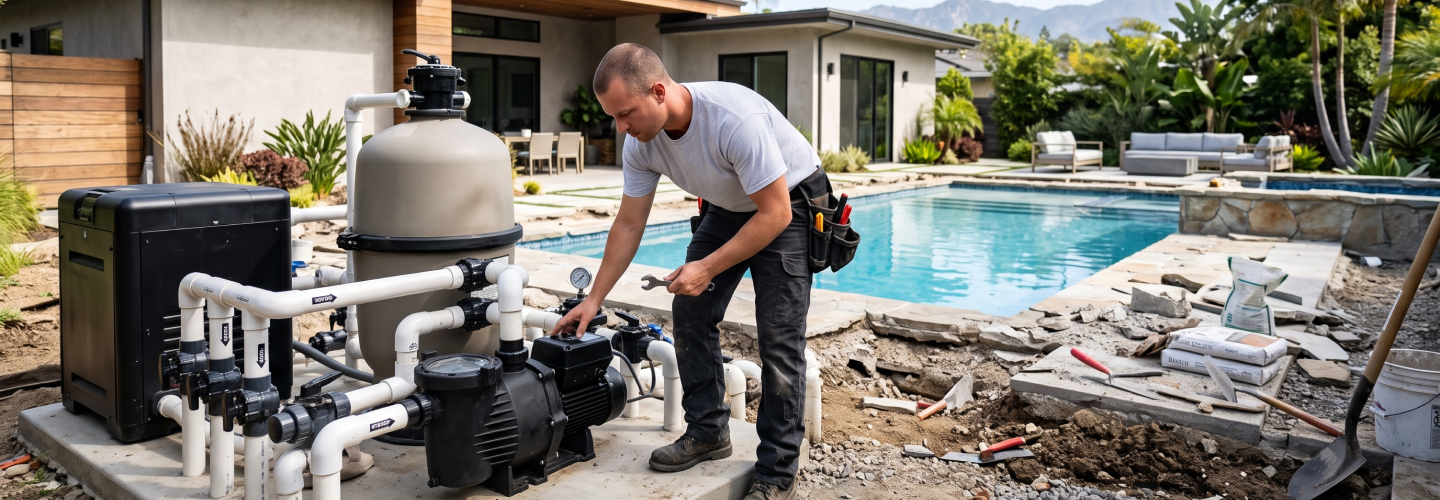
Pool equipment upgrades deserve serious consideration whenever you’re renovating because a renovation can create opportunities to upgrade equipment, plumbing, and electrical components while other work is already underway. A cosmetic pool remodel looks great in photos, but new plaster over an outdated mechanical system is like putting a fresh coat of paint on a broken engine. The pool may look brand-new, but aging equipment underneath can still limit efficiency, reliability, and performance.
This guide covers the core, smart, and accessory upgrades worth considering before your construction crew packs up and heads home.
Why Upgrade Pool Equipment During a Renovation
Upgrading equipment during a renovation can cost less and cause less disruption than doing it separately, since some of the access and site preparation may already be part of the project.
Less Additional Disruption
Heavy machinery is already on-site, some landscaping may already be disturbed, and an equipment swap during the renovation can help avoid a second round of site work or disruption later. That may not seem like a big deal, but having to reopen or disturb a finished area a few years later can be an unwelcome surprise.
Trenching and Line Access
A renovation may give you easier access to underground plumbing and electrical runs before new decking or coping covers them. Once that concrete is finished, adding a new line may require cutting into an otherwise finished surface, adding labor and repair costs to the project.
Core Pool Equipment Upgrades to Audit First
These three core pool equipment upgrades deserve to be audited first, since they can have a major impact on your pool’s daily performance and your monthly utility bill.
Variable-Speed Pool Pumps: Efficiency and Utility Rebates
Replacing an old single-speed pump with a variable-speed pump can significantly reduce pump energy use, which may help offset the cost of the upgrade over time. According to the Pacific Northwest National Laboratory, a variable-speed pool pump can reduce pump energy use by 50% to 90% compared to a standard single-speed model. A single-speed pump operates at one speed, while a variable-speed pump can adjust its speed to match different circulation and flow requirements. If you’re adding a spa, water feature, or other feature that changes the pool’s hydraulic requirements, have the pump and plumbing sized to accommodate the required flow rate before installation.
Advanced Filtration Systems: Crystalline Water with Less Maintenance
Cartridge, sand, and DE filters each handle filtration and maintenance differently, so the right option depends on your pool, water conditions, equipment setup, and maintenance preferences. Installing your new filter before the post-remodel startup process matters more than it sounds. Fresh plaster can release fine plaster dust into the water during startup, which the filtration system must remove. Your builder should follow the plaster manufacturer’s and startup specialist’s recommended startup procedure to manage the new surface and water chemistry while the filtration system removes that material.
Pool Heaters: Planning Utility Access for Extended Seasons
Gas heaters typically provide faster heating, while heat pump pool heaters are generally more energy-efficient for maintaining pool temperatures over longer periods. The better choice depends on your climate, desired water temperature, usage pattern, and available utilities. Heat pumps typically require an appropriately sized electrical circuit, while gas heaters require a properly sized gas supply in addition to electrical service. Planning those utility connections while surrounding areas are already being renovated may be easier and less disruptive than adding them later.
Smart Tech and Upgrades for Modern Pools
A renovation can be a practical time to add smart features that make managing your pool easier.
Pool Automation: Centralized Control for Your New Oasis
Pool automation can replace traditional mechanical timers with centralized controls that let you manage your pump, heater, lights, and valves from a control panel or app. While your electrical boxes are already exposed for other work, planning the electrical connections and equipment compatibility during the renovation can make a future automation setup easier than retrofitting the system after construction is complete.
Pool Light Installation: Upgrading Safety and Backyard Ambiance
Older incandescent or halogen pool lights can use considerably more energy than modern LED options. According to ENERGY STAR, LED lighting products can use up to 90% less energy than traditional incandescent bulbs. LEDs can also provide a longer service life than older lighting technologies, making them worth considering during a pool light upgrade.
Converting the Pool to Saltwater: Timing, Chemistry, and Material Choices
Converting a pool to saltwater means installing an electronic chlorine generator that turns dissolved salt into sanitizer, so the system can generate chlorine automatically instead of requiring all of the chlorine to be added manually. Hayward’s product documentation explains that these systems use electrolysis to generate chlorine from salt dissolved in the pool water.
It can reduce the need to purchase, carry, and manually add chlorine while providing automated chlorine generation. During a renovation, it’s also worth reviewing whether your existing coping, deck materials, metal components, and other surfaces are appropriate for a salt chlorine system. Salt can increase the risk of corrosion or material deterioration, particularly when water chemistry and installation conditions aren’t properly managed.
Structural and Cleanliness Upgrades to Consider
Some upgrades are only practical or are considerably easier while your pool’s structure is already open, which makes a renovation a good time to decide on them.
Robotic Cleaners vs. Dedicated In-Floor Cleaning Systems
Robotic cleaners can generally be added without modifying the pool’s plumbing or structure, making them easier to retrofit than dedicated in-floor cleaning systems. In-floor pop-up cleaning systems require dedicated plumbing and cleaning heads integrated into the pool structure, making a structural renovation a more practical time to consider them.
Safety, Deck Anchors, and Accessibility Upgrades
A renovation is also a practical time to work in features like a tanning ledge, also called a Baja shelf, modern step designs, handrails, and certain safety-cover provisions. Many of these features involve the pool shell, coping, deck, or surrounding structure, so incorporating them into the renovation can help avoid a separate, more invasive project later.
Checklist: How to Prepare Your Equipment Pad for the Remodel Team
Going into your renovation with a clear equipment plan can help keep the project on schedule and prevent rushed decisions later.
1) Photograph your existing equipment labels, serial numbers, and your breaker panel before anything gets removed. This information can help with equipment identification, warranty documentation, permitting, and determining whether new equipment will work with your existing electrical setup.
2) Sort your wishlist into “must-haves,” like efficiency upgrades and pump replacements, versus “nice-to-haves,” like luxury lighting or full automation. This helps you prioritize if your budget gets tight partway through.
3) Ask your builder or pool professional whether the equipment you’re considering qualifies for extended manufacturer warranty coverage. Warranty terms vary by manufacturer, product, installer, and equipment combination, and some manufacturers offer additional coverage for qualifying equipment bundles.
Frequently Asked Questions
1) Can you add features to an existing pool?
Yes, and a structural renovation can be one of the best times to consider them. Adding features such as deck jets, bubblers, sheer descents, new steps, or certain spa features may require modifications to the pool shell, plumbing, electrical system, or surrounding deck. Incorporating those changes into an existing renovation can be significantly easier than reopening finished surfaces later.
2) Is it cheaper to replace pool equipment during a renovation?
It can be. If the renovation already involves plumbing, electrical work, equipment-pad modifications, trenching, or site preparation, completing an equipment upgrade at the same time may reduce duplicated labor and disruption. The actual savings depend on the scope of the project and the equipment being installed.
3) What are the best upgrades for my pool?
The right upgrades depend on your existing equipment, how you use the pool, and what you want to improve. Variable-speed pumps can significantly reduce pump energy use compared with older single-speed models, app-based automation can simplify scheduling and equipment control, and modern LED lighting can improve visibility, energy efficiency, and ambiance. A renovation can be a convenient time to consider all three because related plumbing and electrical work may already be underway.
4) Can I keep my old pump if I change to a saltwater system during a remodel?
Technically, yes, if your existing pump still functions well. A salt chlorine generator does not automatically require a new pump. However, if your existing pump is older or nearing the end of its service life, a renovation can be a convenient time to evaluate whether replacing both makes sense. Compatibility with any planned automation should also be considered.
5) Will plaster dust from a pool renovation damage my new filtration equipment?
Fresh plaster commonly releases fine plaster dust during startup, and that material can quickly load the filter if it is not managed properly. Your builder or startup professional should follow the plaster manufacturer’s recommended startup procedure and use the appropriate filtration and cleaning method for the specific finish.
6) Do I have to choose the same brand for all my new pool equipment?
No. Pool equipment can be mixed across brands, but compatibility varies, particularly when you want centralized automation. Some automation systems offer deeper integration with the manufacturer’s own pumps, heaters, lights, valves, and salt systems than with third-party equipment. Some manufacturers also offer extended warranty programs for qualifying equipment bundles, so it’s worth checking the current warranty terms before choosing your equipment combination.
7) Can you add a pool light if the pool isn’t being renovated?
Yes, but the scope of the project depends heavily on the existing pool and the type of light being installed. Adding a completely new light location can require modifications to the pool shell, electrical system, conduit, or surrounding surfaces. Because of that, major lighting additions are often easier to plan while the pool is already drained or undergoing structural work.
Don’t Put a New Coat of Paint on an Outdated Engine
Investing in your pool’s infrastructure while the crew and equipment are already on-site can protect the investment you’re making in the rest of the remodel while potentially reducing long-term operating costs. Pool equipment upgrades, from a new variable-speed pump to full pool automation, may be easier and less disruptive to install while your deck, plumbing, and surrounding areas are already being worked on.
Before you lock in your final renovation contract‚ sit down and finalize your equipment wishlist․ Poolie’s team can help you sort out which upgrades belong on that list and which ones can wait for another season. Fill out the form below to get started.


