

Poolie Team: Nov 04, 2026
You set your spa to heat up an hour before you plan to use it. You walk outside, step in, and the water is cold. Not lukewarm, but cold. You check the automation panel, and everything looks like it’s running correctly, but the spa isn’t circulating water the way it should. The problem might not be your heater. It could be your swimming pool valve actuator.
This article explains how your pool actuator valve directs water between your pool, spa, and water features, along with seven signs that it may need adjustment or repair.
What Is a Swimming Pool Valve Actuator and How Does It Work?
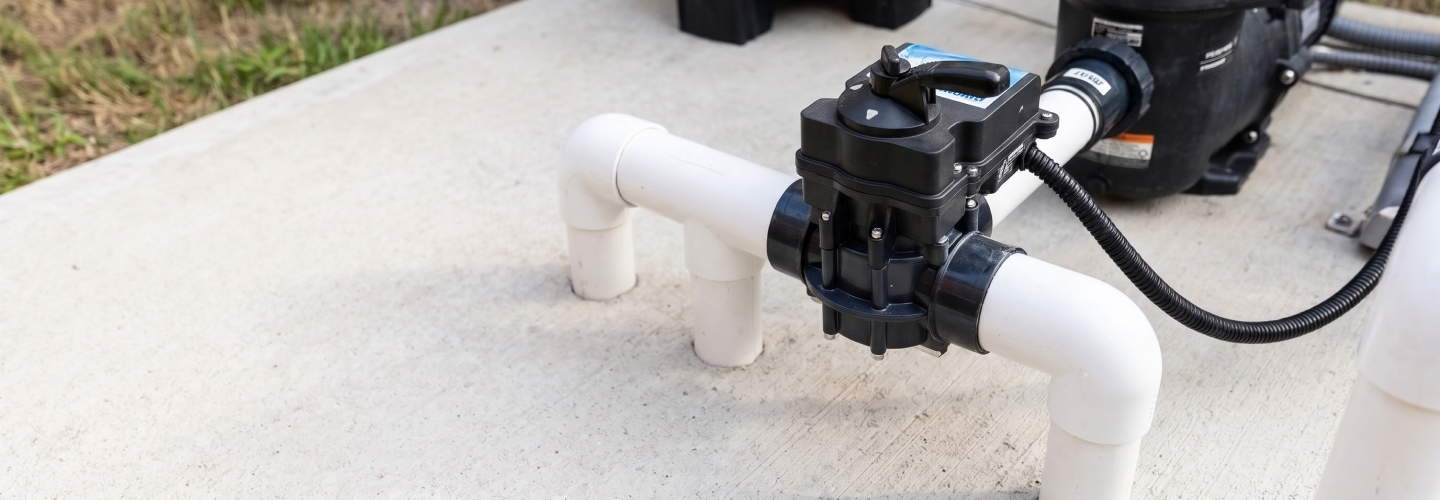
A swimming pool valve actuator is a motorized device attached to a pool valve. It rotates the valve to direct water through different plumbing lines when your automation system calls for it. Think of it as an automatic switch for your water flow.
When you hit a button on your app or automation panel, the system sends an electrical signal to the actuator, often using 24V AC on common pool actuator models. The actuator’s motor turns internal gears that rotate the valve into position. This process usually takes several seconds, and a properly functioning actuator should operate with minimal noise.
Inside a typical actuator, you’ll find a motor, gears, and limit switches that control where the valve stops. Some traditional models also use an external ON1/OFF/ON2 switch, while newer electronic actuators may use a control pad instead. For example, Pentair’s IntelliValve uses an electronic control pad rather than the traditional three-position toggle. (Pentair IntelliValve manual)
If you have a spa or water features, your system may have multiple actuators. Each actuator typically controls one valve, so several may work together to direct water where it needs to go.
7 Signs Your Pool Actuator Valve Needs Adjustment or Repair
Look for these seven signs that your pool actuator valve may need adjustment or repair. Some problems develop gradually, giving you small, easy-to-miss warnings that something is off. Catching them early can help prevent additional problems with your pool equipment.
1) Water Rerouting to the Wrong Feature
You switch to spa mode, but water continues flowing into the main pool instead of circulating through the spa. Or your spa drains when it shouldn’t. These can be signs that the actuator isn’t positioning the valve correctly. One possible cause is a misaligned internal cam, which helps determine where the valve stops during rotation on actuator models that use adjustable cams.
If the cam is incorrectly positioned, the actuator may stop the valve before it reaches the intended position, allowing water to flow through the wrong plumbing lines. The actuator may still be functional and only need adjustment, but a technician should check the valve and its internal components before determining the repair.
2) Pool Valve Actuator Stops Short or Rotates Past Its Intended Position
Pool valve actuators rotate between preset stopping positions, depending on the valve and system configuration. If your actuator stops short or rotates beyond its intended position, water may flow through the wrong plumbing line or become restricted.
If a valve position severely restricts required pump flow, the pump can be put into an abnormal operating condition. Prolonged operation of a centrifugal pump at shutoff can lead to heat buildup, vibration, internal recirculation, and equipment damage. According to Pumps & Systems, prolonged shutoff operation can be harmful for those reasons.
That is more precise than treating every closed-valve situation as “cavitation.” Cavitation is one possible damaging condition, but deadheading and inadequate suction flow are different hydraulic problems.
Stopping short or rotating too far may indicate incorrect cam settings, a positioning problem, or worn mechanical components. A technician can inspect the actuator to determine whether it needs adjustment or repair.
3) Complete Lack of Response to Automation Panel Commands
If you hit a button on your automation panel and the actuator doesn’t respond, start by checking whether the automation system is powered on and displaying any errors. You can also check whether a circuit breaker has tripped, but avoid opening electrical panels or working with wiring. If the actuator still doesn’t move, the problem could involve its power supply, external control switch or control pad, internal motor, limit switches, or automation controls. A technician can identify the cause and determine whether adjustment, repair, or replacement is needed.
4) Grinding, Clicking, or Unusual Mechanical Noises During Rotation
A healthy pool actuator valve generally runs quietly. You might hear a faint hum as the motor operates, but loud grinding, repeated clicking, or unusual ticking sounds may indicate worn gears, an obstruction, or another mechanical problem inside the actuator.
If you hear grinding, stop operating the actuator and turn off the equipment using its normal controls. Continuing to cycle it could cause further damage. Don’t keep pressing buttons on the automation panel, hoping it’ll work itself out. Have a technician inspect the actuator before using it again.
5) External Control Switch or Manual-Control Function Does Not Work as Expected
Many traditional pool valve actuators use a three-position switch labeled ON1, OFF, and ON2. Other models use electronic buttons or a control pad instead.
On a traditional Jandy-style actuator, switching between ON1 and ON2 can rotate the actuator in the opposite direction when power is on. Manual rotation with the power off is a separate procedure and requires following the manufacturer’s instructions. Jandy specifically warns that the filtration pump should be off before manually rotating the valve. (Jandy Valve Actuator manual)
If the external control doesn’t produce the expected movement, the switch or control interface may be faulty. However, a lack of response can also result from power issues, incorrect settings, or problems with the motor or internal components. A technician can check whether the switch or another part needs repair or replacement.
6) Visible Cracks, Moisture, or Water Intrusion in the Actuator Casing
Texas sun and heat can be tough on your swimming pool valve actuator. Over time, prolonged exposure to sunlight and weather can contribute to wear on its casing and seals. Look for visible cracks, moisture, or signs of corrosion around the actuator. If water gets inside the housing, it can damage the electrical and mechanical components. Have a technician inspect the unit to determine whether the casing, seals, or actuator need repair or replacement.
7) Spa Mode Engages but Water Flows Incorrectly
This one is easy to miss because spa mode appears to be working. The heater kicks on, and everything looks right. But you notice that the spa is draining, overflowing, or exchanging water with the pool when it shouldn’t. This could mean that one actuator is moving correctly while another isn’t positioning its valve as intended, disrupting the normal flow between the pool and spa.
In systems with separate suction and return valves, a technician may need to check both actuators to find out whether they’re moving to the correct positions. Inspecting the valves together can help identify the cause before making adjustments or repairs.
How to Adjust Pool Valve Actuator Systems Safely: Quick Checklist
Knowing how to check pool valve actuator systems at a basic level is worth understanding, even if you plan to call a professional for the actual repair.
Here’s what you can check before scheduling a service:
- Check your automation settings. Make sure you’ve selected the correct pool, spa, or water feature mode.
- Watch the actuator’s movement. From a safe distance, observe whether the actuator moves when the system changes modes and whether it reaches its intended position.
- Look for visible problems. Check for cracks, moisture, loose components, or anything that appears to be obstructing the actuator.
- Check the manufacturer’s instructions. Some models have a toggle switch or external control pad for changing the actuator’s operating position. Follow the specific instructions for your model, and never force a valve or operate it in a way that could block water flow.
- Leave internal adjustments to a professional unless the manufacturer specifically identifies them as an owner adjustment. Adjusting cams, limit switches, gears, or wiring requires an understanding of the actuator and pool plumbing system.
Never operate your pump with a valve positioned to block its required water flow. If the actuator isn’t moving correctly or you’re unsure which position the valve should be in, stop operating the affected equipment and contact a pool professional.
Homeowner-Safe Maintenance vs. When to Call a Professional
There’s a clear line between what homeowners can safely check and what should be left to a qualified pool technician or electrician.
You can safely handle:
- Checking your automation settings for the correct operating mode
- Looking for visible cracks, moisture, or corrosion around the actuator
- Checking whether a circuit breaker has tripped without opening electrical equipment
- Observing whether the actuator moves to its intended position
- Using manufacturer-approved external controls only when you understand their operation
Leave this to a professional:
- Inspecting or repairing electrical wiring and automation control boards
- Adjusting internal cams, limit switches, or gears when you are not trained or the manufacturer does not identify the adjustment as homeowner service
- Replacing actuator motors or internal components
- Diagnosing problems involving multiple valves or actuators
- Investigating overheating pumps, restricted water flow, or unusual equipment noises
Always be cautious when dealing with electrical equipment around your pool. The Electrical Safety Foundation International (ESFI) recommends proper grounding and ground-fault circuit interrupter (GFCI) protection to reduce electrical hazards around pools and spas. ESFI also recommends that pool wiring and repairs be performed by a qualified electrician. If your actuator requires electrical troubleshooting or repair, leave the work to a qualified professional. (esfi.org)
Poolie’s technicians work with automated pool systems across Texas. If your swimming pool valve actuator is moving in the wrong direction, not responding, or making grinding noises, reach out to the Poolie team before the problem gets worse.
Frequently Asked Questions About the Swimming Pool Valve Actuator
1) Can I manually turn an automated pool actuator valve?
Often, but the procedure depends on the actuator model. Do not assume that moving the switch to OFF automatically frees the valve for hand rotation.
For example, Jandy’s manual-override procedure with power off requires moving the switch to OFF, loosening the locking knob, and disengaging the gear train before rotating the valve. The manufacturer also says the filtration pump should be off first. Pentair and other actuator models can use different procedures. (Jandy Valve Actuator manual)
Follow the instructions for your exact actuator rather than forcing the valve by hand.
2) How long does a typical actuator valve for swimming pool systems last?
Actuator life varies with model, cycle frequency, installation, weather exposure, water intrusion, valve resistance, electrical conditions, and maintenance. Visible cracking, corrosion, slow movement, unusual noise, or inconsistent positioning are more useful replacement indicators than age alone.
3) What to do when a swimming pool valve actuator is turning the wrong way?
On some traditional actuators, switching from ON1 to ON2 or vice versa reverses the actuator’s operating direction. Pentair’s CVA-style actuators and Jandy’s JVA are examples of products that use this type of switch. (Pentair IntelliTouch installation guide)
But not every actuator uses that design. Newer electronic actuators may be configured differently. Before changing anything, identify the model and follow its manual so you do not send the valve to a position that restricts required flow.
4) Will a broken pool actuator valve damage my pool pump?
It can, depending on which valve fails and where it stops. An actuator failure by itself does not automatically damage the pump.
The risk is greatest if the failed valve position severely restricts the pump’s required suction or discharge flow. Prolonged operation at shutoff can cause heat buildup, vibration, internal recirculation, and other pump damage. Pentair even markets its CVA24 actuator as helping prevent pump deadheading when correctly installed and configured. (Pentair valve actuator product information)
If the pump sounds abnormal, loses flow, runs dry, or appears to be operating against a closed valve, shut the affected system down using its normal controls and have the valve position checked.
Keep Your Pool Valve Actuator Working Properly
Swimming pool valve actuators may seem like simple pieces of hardware, but they play an important role in controlling water flow throughout your pool. If your spa isn’t heating or circulating water correctly when you activate spa mode, a malfunctioning actuator could be part of the problem.
Whether your actuator needs adjustment, repair, or replacement, it’s important to make sure it works properly with your automation system and the other valves at your equipment pad. If you’re experiencing problems with your pool automation, request a free quote from Poolie or fill out the form below.


