
Poolie Team: Jan 09, 2025
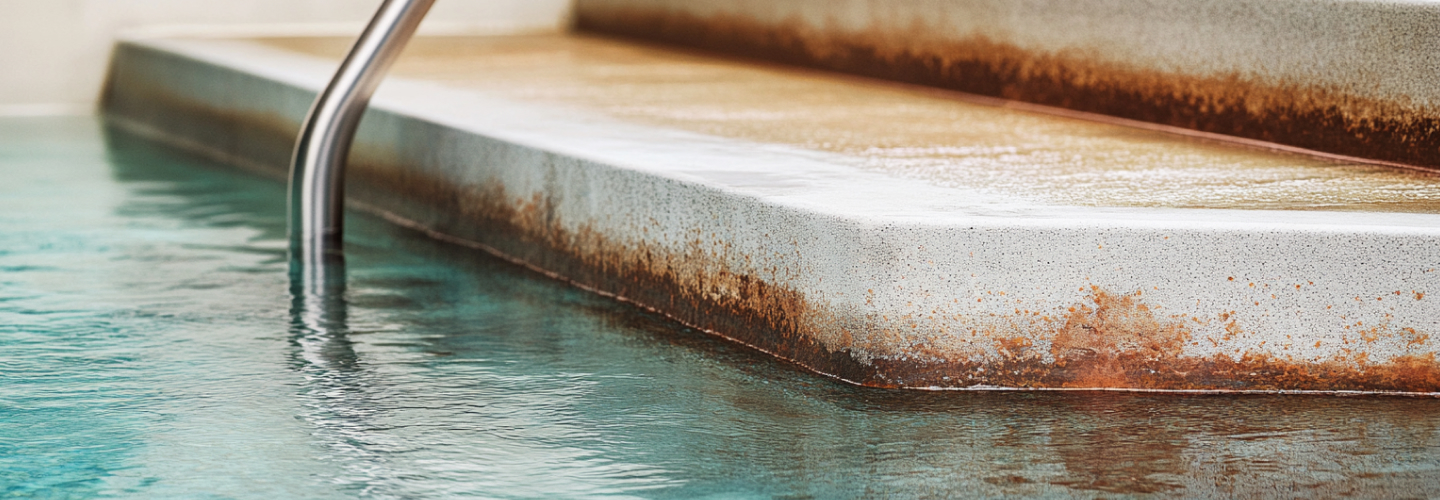
Copper stains in your pool show up as green or blue-green marks on your walls, floor, or waterline. They form when copper from an ionizer, a copper-based algaecide, or corroding pipes and heaters dissolves into your water and settles on surfaces when chemistry shifts. The fix involves confirming it is copper, adjusting your pH and chlorine for treatment, applying the right stain remover, and then addressing the source so it doesn’t come back.
This guide covers two treatments: one runs with your pump on, and the other one runs with it off overnight. You can pick one and follow its steps.
How to Get Rid of Copper Stains in Your Pool
Copper stains get addressed well with treatments when you catch them early. A monthly preventive metal and stain control product can clear fresh metal stains before they set. For stains already on the surface, targeted copper stain removers are available and designed specifically for this; just make sure the product you choose lists your pool surface type on the label, because some formulas can bleach vinyl, fiberglass, or painted surfaces permanently.
Two things to take note of before you start: if you run a ClearBlue ionizer, check with ClearBlue before adding any metal remover, sequestrant, or stain remover. Some of these conflict with the system. And if your copper levels are still high after treatment, a sequestrant helps keep dissolved copper from settling back onto your surfaces.
Confirm It’s Copper
To check whether a stain is metal, press a vitamin C tablet on it. If it lifts or lightens, Natural Chemistry’s Stainfree products will work on it. Catching a stain early helps prevent further damage. Before any Jack’s Magic stain treatment, start by testing the water for both iron and copper with a test kit first. That result determines which product and dosage you’ll be needing.
Set Chlorine and pH First
Your water chemistry needs to be in the right range before treatment, and it also has a role in why copper stains form in the first place. Copper heaters and pipes can corrode when pH runs low, adding copper to the water. When pH rises, or you shock the pool, that dissolved copper drops onto surfaces as stains.
Keep your everyday pH between 7.2 and 7.6 to reduce the risk of copper staining. And if you’re seeing green that comes from copper, don’t shock it: Orenda warns that shocking oxidizes the copper and makes it worse. Each product below has its own pH and chlorine targets, so follow the steps for the one you chose.
Treat the stain with the pump running
This method uses Jack’s Magic Stain Solution #2 (The Copper & Scale Stuff) in the water. A full treatment can take 48 hours to several weeks, and the steps are specific to this product.
- Bypass the heater before you start, and keep it bypassed while the treatment runs.
- Add 10 lb of Stain Solution #2 per 10,000 gallons with the pump running continuously, and keep it running until the treatment is done.
- Add a sequestrant, which is required to filter the stain out of the water.
- During treatment, pH often drops into the low 6.0 range. No swimming until the treatment is done and the water is completely rebalanced.
- After treatment, rebalance your water, and don’t shock for two weeks.
Spot-treat One Stain with the Pump Off
This method uses Natural Chemistry’s Stainfree, and its steps don’t mix with the Jack’s Magic routine above. Read the instructions that come with the kit before you start, since the figures here are for Stainfree only.
Balance your water first:
- pH: 7.2 to 7.6
- Alkalinity: 80 to 120 ppm
- Calcium hardness: 200 to 400 ppm
- CYA: below 50 ppm
- Chlorine: 1 ppm or less
Add a pulp-based filter aid to a cartridge or sand filter, or properly charge a DE filter. Then:
- Turn the pump off and add the stain remover at 1 lb per 10,000 gallons, as close to the stain as possible, and leave it overnight.
- Brush the walls and floor thoroughly before you turn the pump back on.
- Turn the pump on and add Metal Free at 33.9 oz per 20,000 gallons, then vacuum and clean the filter.
- Don’t add a clarifier, flocculant, or polyquat algaecide within 24 hours of Metal Free.
- Once the stain is gone, test your water chemistry to make sure pH and chlorine are balanced. After that, hold off on shock for a week or more, and bring chlorine back in small amounts, no higher than 2 ppm, until then.
With either product, wear the protective gear listed on the label and keep swimmers out until the treatment is complete and chlorine is back to a normal level.
What Copper Stains Look Like, Color by Color
Copper stains can show up as green or blue-green discolorations on surfaces that were clear. A green tint in the water is often one of the first signs. It usually means copper is dissolved in the water, often from corroded pipes or copper-based algaecides.
Purple is the other copper color. When stabilizer (CYA) and copper run high at the same time, they can combine into copper cyanurate, which turns the water purple or pool surfaces purple. Dissolved copper can also tint light-colored or blonde hair green; a common complaint from Texas swimmers during the summer.
If you aren’t sure whether the staining is from copper or iron, a test kit gives you a clear answer. For iron stains, see our guide to iron and other metal stains.
Lower the copper in the water so the stain doesn’t come back
Removing the stain is only half the job. If your water still tests high for copper after treatment, that copper is still there and can settle back onto surfaces. A sequestrant binds to dissolved metals and keeps them suspended so your filter can catch them. Jack’s Magic sequestrants clump metals so the filter can catch them. A chelant such as Orenda’s SC-1000 holds copper in solution rather than removing it; to take copper out, consider a metal removal system and a sequestering agent.
Check your algaecide too. Some algaecides contain copper, and switching to a copper-free formula is an easy step if copper is already a problem in your pool. Corroded heaters, pipes, and a poorly managed ionizer can all continue to add copper to your water, so if you suspect that your equipment is corroding, have a technician take a look. Keep your water chemistry balanced, since it’s the most reliable way to slow that corrosion over time.
When a copper stain needs a pro: purple, set-in, or across the whole floor
DIY treatment handles most copper stains, but some situations require a pro. If the staining is widespread, purple, or hasn’t responded to treatment, a pool technician can test your water for copper and iron, check how far the staining has spread, and run a whole-pool treatment matched to your surface type. For plaster pools where staining bypasses treatment, ask your technician about acid washing as a next step.
Contact Poolie by filling out the form below, and a Poolie technician can test your water, track down the copper source, and run the treatment from start to finish.