Green Pools: How to Clear Them Up?

Poolie Team: Feb 28, 2024
Green pool water almost always comes down to algae. Clearing it takes four steps: brushing loose the growth, raising chlorine through shock treatment, running the filter nonstop, and retesting daily until levels hold steady.
If you’re a Texas pool owner, learn how to bring a green pool back to clear water, and keep it that way.
Cause of Green Pool Water
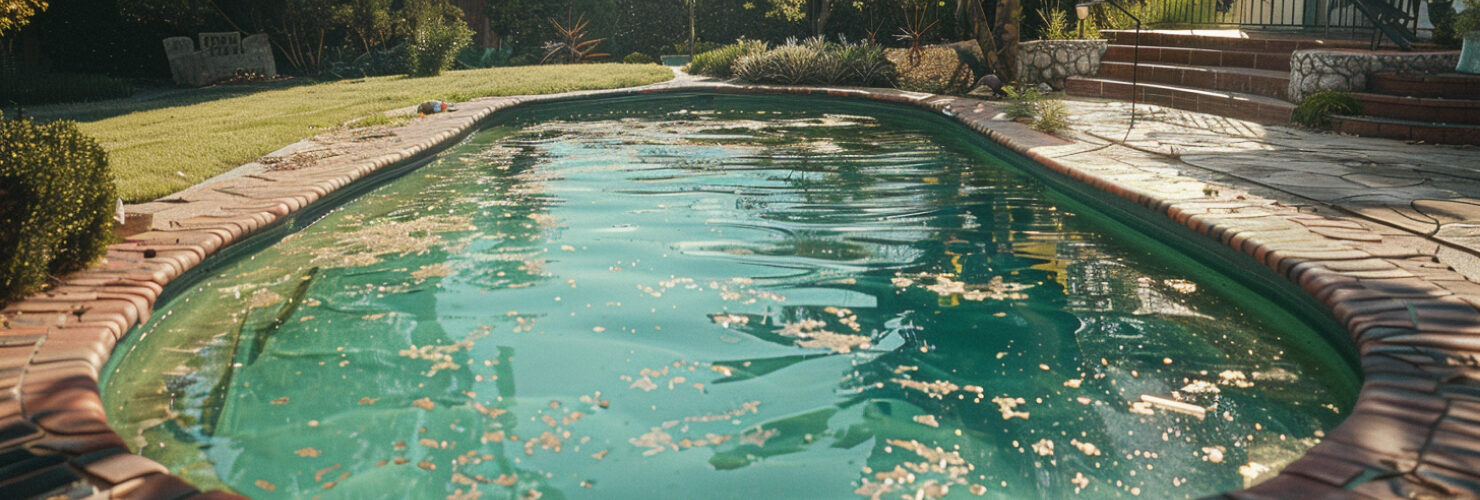
Algae is one of the most common reasons pool water turns green. It shows up because sanitizer levels drop low enough for it to take hold. This usually traces back to a few days of low free chlorine, a circulation problem, or heavy rain diluting the water.
Different algae types can appear in different ways, including cloudy green water, wall buildup, or dark spotting. Green, free-floating algae is the most common and usually the easiest to clear. Black or yellow algae (mustard algae) cling to surfaces and grout lines and take more aggressive treatment to remove.
In Texas, sustained temperatures above 95°F can burn through free chlorine roughly twice as fast as normal. The intense heat is one reason algae blooms spike here every summer.
Identifying the severity and type of algae determines the most effective treatment approach. Before buying chemicals, get a clear read on what type you’re dealing with and how far it’s progressed.
Step 1: Brush the Pool and Clear Out Debris
Brushing the pool walls, floor, and steps helps loosen algae buildup and exposes it to sanitizer treatment.
Algae protects itself with a slimy outer layer. Brushing breaks that layer apart so chlorine can actually reach it. Focus on corners, steps, and areas with poor circulation, since algae tends to settle where water movement is weakest.
Surface debris, leaves, and organic material should be removed with a skimmer or vacuum since they can contribute to ongoing water quality issues. Leftover organic matter feeds algae. It also consumes chlorine that should be going toward disinfection instead.
Step 2: Shock the Water to Kill the Algae
Shock treatment is commonly used to raise chlorine levels and help eliminate algae and organic contaminants. This is the core of any green pool recovery. Algae can’t survive a sustained spike in free chlorine, but it takes more than a single dose to get there.
Depending on the condition of the water, multiple shock treatments may be required over several days. A pool with heavy green cloudiness may need shock repeated on back-to-back days before the water starts to clear.
Water testing is important throughout the process to monitor chlorine, pH, and stabilizer levels. The CDC’s guidance on pool chemical safety notes that keeping free chlorine and pH within recommended ranges supports both disinfection and swimmer safety. Test daily rather than guessing based on how the water looks.
Step 3: Add Algaecide for Stubborn or Recurring Growth
Some algae problems may require an algaecide in addition to shock treatment, especially in pools with recurring or stubborn algae growth. This applies most often to black algae and mustard algae, both of which resist standard chlorine levels.
The right product and dosage depend on the type of algae present and the current water chemistry of the pool. Using the wrong algaecide, or applying it before shocking, generally wastes money. It also won’t clear the water any faster.
Step 4: Keep the Filter Running the Entire Time
Running the pool pump and filtration system continuously during treatment helps remove dead algae, suspended particles, and contaminants from the water. Shutting the pump off overnight during a recovery lets everything you just killed settle back into suspension.
Filter cleaning or backwashing may also be necessary during the cleanup process to maintain proper circulation. A clogged filter loses efficiency fast when it’s pulling out that much dead algae. Check pressure daily and clean or backwash as needed.
When to Call a Pool Professional
If you’re finding it hard to keep green water from coming back, despite following the steps above, it may be time to call a pro. A few signs point to that:
- Stabilizer levels are off. Low cyanuric acid (CYA) lets chlorine burn off faster in direct sun, and repeat blooms can point back to this.
- Turnover rate isn’t hitting target. If the pump isn’t running long enough each day for a full turnover given your pool’s size, algae gets a foothold even when chemistry looks fine on paper.
- Chlorine won’t hold after repeated shock treatments. This usually points to a pump or filtration issue rather than a chemical one.
- The filter can’t keep up with the debris load. In that case, equipment repair is worth ruling out before continuing to dump chemicals into the water.
Severely green or cloudy water gets harder and more expensive to correct the longer it sits. Even with chemistry and equipment dialed in, conditions can shift fast enough that professional help is the faster, cheaper option.
Poolie identifies the source of water quality issues and provides professional pool cleaning and treatment for long-term results. Fill out the form below to connect with the Poolie team and get your pool back on track.
Join Our Tribe of Delighted Texas Pool Owners
Forget the hassle of pool maintenance.
Poolie’s team of professionals can keep your pool serene and inviting without you lifting a finger. We offer everything from detailed cleaning to emergency repairs and restoration.
Poolie’s Latest Tips & Tricks
Freezing Weather Tips for Pools

What Type of Pool Filter is Best?