

Poolie Team: Oct 20, 2026
There’s a lot to consider when choosing your swimming pool tile and coping. Most of those choices happen in daylight, whether you’re comparing samples at your local pool store or browsing images online. But once your pool is complete and you turn on the lights at 8 p.m., it may not look quite how you imagined. If you are looking to update your current pool to make it look brand new at night, your tile and coping will play a big role.
This article discusses how tile and coping can enhance your backyard at night, what to consider before updating them, and what to ask your contractor.
How Swimming Pool Tile and Coping Look Under Lights
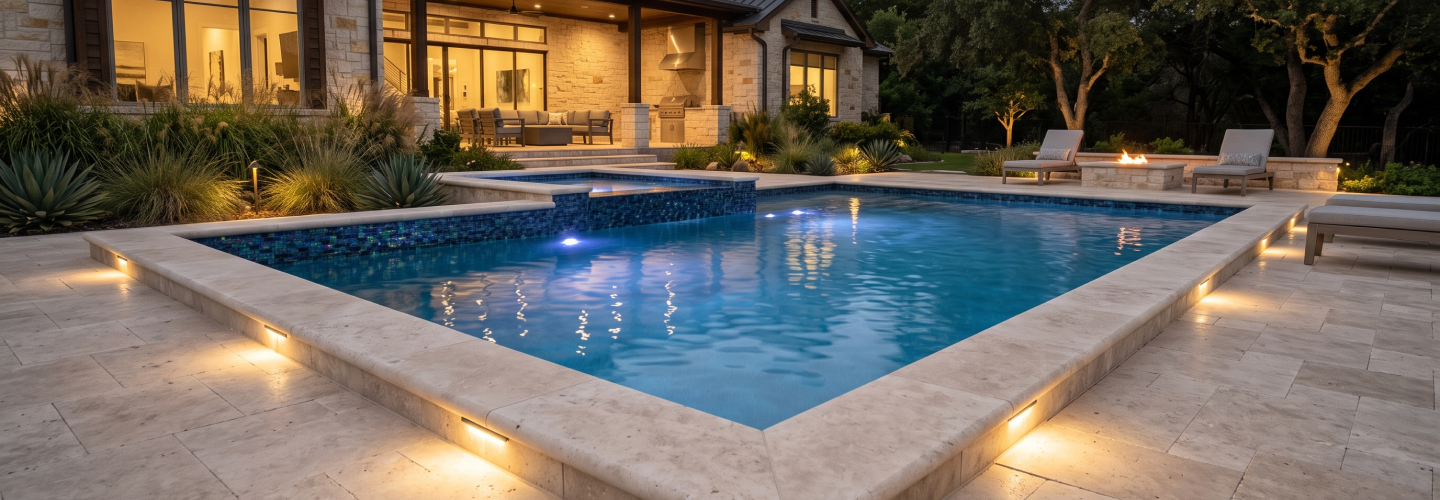
Your pool will look different at night depending on the tile and coping you choose and where your lights are positioned. Underwater lights illuminate submerged surfaces, while surrounding lights can bring out the color and texture of coping above the waterline. Iridescent glass tile can add shimmer as the lighting and viewing angle change.
According to Mineral Tiles, iridescent glass tiles have a reflective coating that interacts with light and water to produce subtle color variations, making the pool’s appearance shift as light changes and moves across the surface. Color-changing LED pool lights can change how those finishes appear, so compare samples under the lighting settings you plan to use.
Coping is also a big factor in how your pool appears at night. Coping can receive light from surrounding landscape lights or even string lights. Textured coping can create subtle shadows under angled lighting, adding depth to the pool’s edge. For a sleeker look, focus on clean lines and a consistent finish that still provides traction when wet.
Illuminating Design: Modern Pool Coping Options and Pool Tile Ideas
Now that you understand how tile and coping can look different at night, you can begin to think about what you want to achieve. Below are some tips on choosing the right modern tile and coping to create the nighttime look you want.
Selecting the Best Pool Coping Options for Nighttime Drama
Common pool coping options include natural stone, precast concrete, and pool-rated porcelain. Each offers a different mix of color, texture, and upkeep.
Natural stone such as travertine, limestone, and bluestone can add texture that stands out under angled lighting. Precast concrete offers a range of colors and finishes, while pool-rated porcelain can create a consistent, modern look. Compare samples after dark, and ask your contractor about heat, wet traction, chemical exposure, and any sealing requirements for the specific product.
For wet poolside areas, don’t choose a material based on appearance alone. Ask whether the specific product and finish are intended for exterior wet use and suitable for barefoot traffic. ANSI A326.3 guidance from the Tile Council of North America treats exterior wet applications such as pool decks as a distinct use category and notes that texture, drainage, maintenance, and other factors can affect performance.
If you want a clean, sharp look, consider simple edge profiles and consistent colors. Choose coping intended for wet poolside use, and confirm its suitability with the manufacturer and installer. You don’t need a high-gloss finish to achieve a modern look.
Low-Profile and Seamless Modern Pool Coping Trends
A cantilevered edge can create a clean transition from the deck to the water, making it a useful option for modern pool coping. After dark, the effect depends on the edge profile and lighting placement; an overhang can still cast shadows. Ask your contractor how the proposed coping will look under your existing lights and whether any lighting changes are needed.
Luminous Pool Tile Ideas: Glass, Mosaic, and Glow Accents
Glass tile can be a strong option when you want a reflective or shimmering nighttime effect. You can use a single color for a more uniform look or combine multiple colors in a mosaic pattern. Depending on the finish and lighting angle, glass mosaics can reflect underwater lighting in ways that make the surface appear more dynamic after dark.
Pool-rated glow-in-the-dark accents can add a decorative detail, while reflective tiles respond to nearby light. Neither should replace proper lighting or required depth markings. Blues and aquamarines are worth considering, but the best color depends on your pool finish and lighting. Compare samples under white light and any colored settings you regularly use.
Coordinate Tile, Coping, and Pool Lighting
When comparing pool tile ideas, look at the tile, grout, and coping together after dark. A reflective waterline can stand out against a quieter, matte coping finish, while a more uniform palette can create a softer transition around the pool.
Try viewing samples under your usual white-light setting first, then any colored settings you enjoy. Warm and cool lighting can make the same materials appear different. Check the combination from your patio or seating area, too, so you can judge the overall effect rather than just a close-up sample.
Signs Your Pool Ambiance Is Fading (And When to Plan a Renovation)
If your tile and coping look dull under the lights, check whether buildup is hiding their finish. White deposits along the waterline may be calcium scale, which can make reflective tile look cloudy. Have the cause assessed before assuming the materials need replacement.
Cracked or loose coping is a separate issue; beyond the aesthetic problem, it’s a genuine safety hazard after dark when visibility is lower. If any coping sections shift, rock, or show visible cracking, that needs to be addressed first.
If your pool also needs resurfacing, ask whether combining the projects could reduce repeated preparation, downtime, or cost. The savings depend on the condition of your pool and the work involved.
Crucial Material Mistakes That Are Expensive to Undo
A few choices made during a tile and coping renovation are difficult or costly to reverse.
One costly mistake is choosing coping that becomes slippery when wet. A polished finish may look appealing in a showroom, but it may not suit a pool edge. Ask the manufacturer and installer to confirm that the specific material and finish are suitable for wet, barefoot use.
The second mistake is choosing tile color in daylight alone. Compare samples under your planned nighttime lighting to see whether the color and finish create the effect you want.
The third mistake is uneven waterline tile or inconsistent coping alignment, which lighting can make more noticeable. Ask your contractor how they will keep the waterline visually consistent while providing the drainage slope needed at the coping.
Finding a Trusted Texas Pool Renovation Contractor
The materials are only as good as the installation, so choosing the right contractor for pool renovation matters just as much as choosing the right tile.
Ask your contractor for photos of completed projects in daylight and after dark, ideally showing tile, coping, and lighting combinations similar to what you want. If nighttime photos aren’t available, ask how they will help you evaluate your material choices under the planned lighting.
Here are some questions you should ask your contractor:
- Can you show how my tile and coping choices will look under the planned lighting?
- Are the tile, setting materials, and grout approved for their intended pool applications?
- How will you handle movement joints between the coping and deck?
- If lighting changes are included, who will perform the electrical work, and does their TDLR license cover that scope?
- What warranty do you offer?
- Can you give me references of work you have done in my area?
If the renovation includes lighting changes, confirm that the person doing the electrical work holds the appropriate TDLR license for the job. TDLR allows residential appliance installers to perform certain pool-related electrical work, while other work requires a licensed electrical contractor.
For example, TDLR says a licensed Residential Appliance Installer may install, uninstall, or replace certain pool-related electrical devices, including underwater lights, on the load side of an existing control center when the work stays within that license’s scope. If the project requires a new or upgraded line circuit, that work must be performed through a licensed electrical contractor with a designated master electrician.
Trust Your Pool Remodel to Poolie
Poolie works with Texas pool owners across the DFW, Austin, and San Antonio areas on tile and coping renovations, plaster resurfacing, and full pool remodels. Before-and-after photos from completed projects are on the Poolie website, including nighttime shots that show how the finished pool actually looks after dark.
Every renovation comes with detailed photo updates throughout the process, so you always know where things stand. If you want to learn more, fill out Poolie’s quote form. Describe the issues you’re facing, and Poolie’s team can help you explore your options.
Frequently Asked Questions
1) How long does it take to replace pool tile and coping?
Project timing varies with pool size, demolition requirements, material choice, weather, substrate condition, cure times for the products being used, and whether other renovation work is happening at the same time.
A straightforward tile-and-coping project may take several days to more than a week, while a larger renovation that also includes resurfacing, structural repairs, or extensive deck work can take longer. Setting materials, grout, sealers, and other products also have their own cure or wait times before the pool can be returned to normal use.
Ask your contractor for a project-specific schedule that includes demolition, installation, curing, filling, startup, and any other work involved rather than relying on a universal 1–2 week estimate.
2) What tile creates a reflective look at night?
Glass tile is one popular choice for a reflective nighttime look because its surface can catch and reflect underwater or surrounding light. Iridescent and mosaic glass products can create especially noticeable changes in shimmer and color as the viewing angle and lighting change.
That does not mean glass is automatically the “best” tile for every pool. Porcelain and other pool-rated tiles can also create attractive nighttime effects depending on their glaze, texture, color, and surrounding lighting. Compare actual samples under the lighting you plan to use before making a final decision.
3) Can I change my coping style without replacing the deck?
In many cases, yes, but it depends on how the existing coping is installed and what style you’re switching to. If you want to switch to a cantilever or flush deck coping, it may be more difficult. Your pool professional can tell you what will work best for your pool.
The condition of the bond beam, deck edge, expansion or movement joint, drainage, and surrounding deck can all affect what is practical. Some coping changes can be localized, while others may require modifying part of the adjacent deck.
4) How does the weather in Texas affect my pool tile and coping?
Texas weather can affect your pool tile and coping in a couple of ways. Expansive soils found in many parts of Texas can shrink and swell as moisture conditions change, which may contribute to movement in decks, foundations, and other structures. Whether that movement affects a particular pool depends on the site, soil, drainage, construction, and structural design.
Sun exposure and heat can also affect some sealers, coatings, grout, and other materials over time, while freeze-thaw events can matter for susceptible stone or masonry products in colder parts of the state. Rather than assuming every tile or coping material will react the same way, choose products rated for the site conditions and follow the manufacturer’s maintenance guidance.
Good drainage matters too. Keeping water from collecting around coping and deck joints can help reduce unnecessary movement, staining, and moisture-related deterioration.
Ready to Transform Your Evenings? Let’s Light Up Your Pool
Updating your swimming pool tile and coping can give your backyard a fresh look after dark. The right combination of color, texture, and lighting helps bring the design together. Poolie can help you with all of your pool coping options and pool tile ideas. Fill out the form below to get started.


