

Poolie Team: Oct 01, 2026
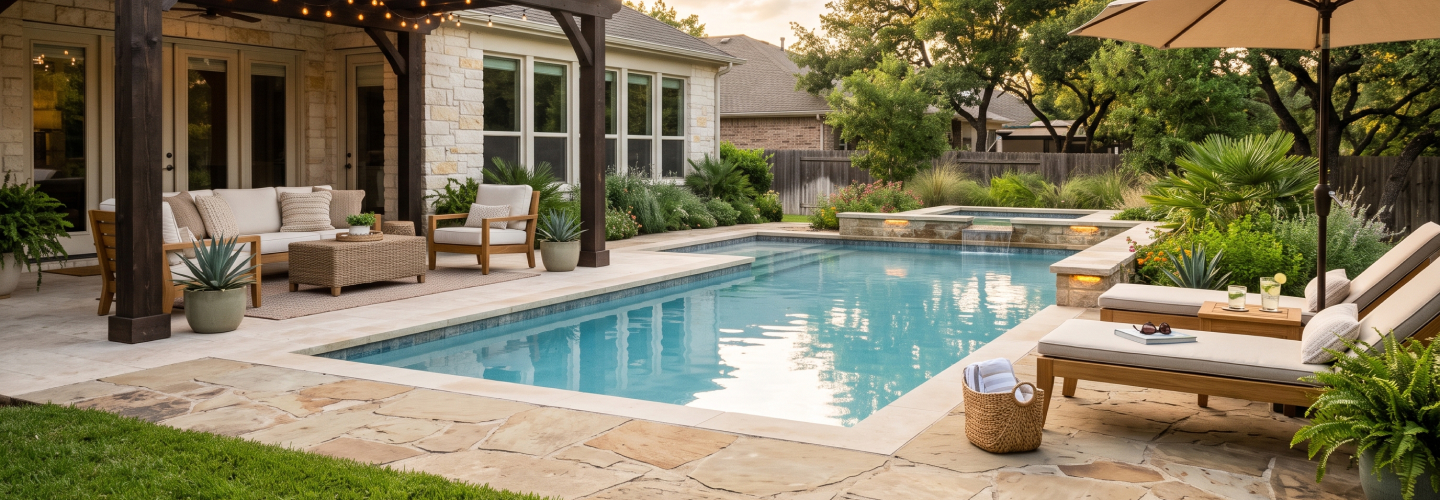
Poolside living is about making the area around your pool as inviting as the water itself. Comfortable seating, well-placed shade, thoughtful lighting, and a few intentional design choices can turn an ordinary backyard into a place that feels more like a private getaway.
You don’t need a boarding pass to create that feeling at home. With the right layout, comfortable gathering spaces, and finishing touches, your backyard can capture much of the atmosphere people love about a resort.
This guide walks you through the layout decisions, comfort upgrades, aesthetic choices, and ambiance details that can transform an ordinary pool deck into a more polished, resort-inspired outdoor space.
1) Designing the “Resort Mindset” (Space Assessment)
Before buying furniture or accessories, decide how you want to use your pool area. That decision should guide everything from seating and shade to how much open deck space you preserve.
Think about what you want the backyard to become. Is it an entertainment space for weekend gatherings, a quiet place to unwind after work, or a family-friendly area that needs room for swimming, lounging, and meals?
Once you know the goal, spend some time observing the yard.
- Sunlight paths: where the light lands in the morning versus late afternoon, so your lounging area isn’t baking by 2 p.m.
- Prevailing wind direction: this matters more than most people expect, especially if a fire pit or fire table is part of your plan down the line.
- Natural privacy barriers: existing fences, hedges, or other structures you can build around rather than starting from scratch.
Also note the location of existing electrical, plumbing, and gas connections. If your plans require utilities to be extended or relocated, accounting for that work early can help prevent surprises later.
2) Creating Functional Comfort Zones
Instead of treating the entire pool deck as one space, divide it into areas designed for different activities. You might have one zone for lounging, another for dining or conversation, and another dedicated to shade.
The goal is to give each activity enough room without making the deck feel crowded.
The Lounging Zone
Comfortable lounge furniture can immediately change how a pool area feels. Rather than choosing furniture based only on appearance, look for products specifically designed for outdoor and poolside use.
Chaise lounges, daybeds, and other outdoor seating can all work depending on the size of the deck and how your family uses it.
Just as important as the furniture itself is the space around it. Leave enough clear room for people to get in and out of chairs and move around the deck without stepping over towels, bags, tables, or other furniture.
There is no single spacing measurement that works for every residential pool deck. Furniture dimensions, walking routes, local requirements, accessibility needs, and the size of the surrounding area all affect the appropriate layout.
Before buying, measure your furniture in its fully extended or reclined position and make sure important walkways remain clear.
The Dining and Socializing Area
Whenever possible, position outdoor sectionals, conversation sets, dining furniture, and similar pieces outside the areas that receive frequent pool splash.
Keeping cushions and furniture away from repeated soaking can help them dry more easily and reduce unnecessary exposure to pool water.
For a dining area, measure the table and chairs as a complete setup. Remember that guests need room to pull chairs away from the table and walk behind someone who is seated.
One useful trick is to mark the furniture footprint on the deck with painter’s tape before purchasing anything. It gives you a better idea of how much usable space the setup will actually consume.
If your yard does not have room for both a dedicated dining set and a separate conversation area, versatile furniture such as a sectional and outdoor coffee table can support casual meals as well as lounging.
Smart Shade Solutions
Achieving sun protection and other benefits may involve selecting an appropriate shading device for your site:
- Architectural pergolas offer a built-in look and can carry string lights or fans, but cost and shade coverage depend on the design and a fixed structure.
- Cantilever umbrellas give you flexible, movable shade without obtrusive posts in your lounging area, which keeps the space feeling open.
- Natural canopy trees are low cost, and they add greenery, but they take years to mature and need the right species to avoid dropping debris near the water.
- Retractable canopies sit between two extremes; you get adjustable coverage on demand, without committing to a permanent structure over your lounging area.
Before installing any shade structure, consider wind exposure, drainage, required anchoring, property setbacks, and applicable local requirements.
3) Create a Cohesive Resort-Inspired Look
A pool area often feels more polished when its furniture, textiles, and accessories follow a consistent design direction.
Start with a color palette and use it throughout the space.
Popular approaches include:
- Crisp Mediterranean whites and blues
- Warm modern desert neutrals
- Lush tropical greens
From there, choose outdoor furniture that complements the palette and is designed for exposure to the elements.
Materials such as teak, outdoor-rated synthetic wicker, marine-grade polymers, and powder-coated aluminum are commonly used outdoors, but durability and maintenance requirements vary by product. Compare the manufacturer’s care instructions and warranty before deciding.
Decking and Pool Surround Materials
The pool deck has an enormous impact on the overall look of the backyard.
Travertine can provide natural color variation and a high-end, resort-inspired appearance, but don’t assume every travertine product will remain cool under intense Texas sun. Color, density, finish, installation, and direct sunlight can all affect surface temperature.
If heat underfoot is a priority, ask your installer or supplier how the specific material and finish you’re considering perform in exposed poolside environments.
Textured pavers, concrete, and other pool-deck materials provide additional options. When comparing them, consider:
- Slip resistance when wet
- Surface temperature
- Maintenance requirements
- Drainage
- Durability
- Installed cost
The right choice depends on the property, climate, design, and how the deck will be used.
Boutique Accessories
Smaller details can make a surprisingly noticeable difference.
Coordinated oversized towels, outdoor rugs, decorative pillows, planters, and shatter-resistant drinkware can help a basic pool deck feel more intentionally designed without requiring a major renovation.
The key is restraint. A few coordinated accessories usually create a cleaner look than filling every available area with decor.
4) Ambiance Architecture: Lighting, Sound, and Greenery
The atmosphere around a pool often comes from several smaller elements working together rather than one dramatic feature.
Lighting, sound, and landscaping are three of the most effective.
Layered Outdoor Lighting
Instead of relying on a single bright floodlight, consider several types of lighting with different purposes.
Options might include low-voltage LED path lights, landscape uplighting, architectural lighting, overhead string lighting where appropriate, and underwater pool lights.
Compatible smart controls may allow certain lighting systems to be scheduled or adjusted from a phone or automation system. Before purchasing, confirm that the fixtures, transformers, dimmers, and pool automation equipment you want to use are compatible.
Electrical installations around swimming pools have specific safety requirements. Have a qualified professional confirm that new electrical work, fixtures, equipment, and placement comply with applicable electrical codes and manufacturer requirements.
Pool-Friendly Landscaping
Choose plants that provide color or privacy without constantly depositing leaves, fruit, flowers, seeds, or other material into the pool.
Reducing plant debris can mean less debris to remove from the water and baskets while keeping the surrounding space looking cleaner.
Also consider mature plant size, root systems, irrigation needs, and how close landscaping will be to pool decking and equipment.
Acoustic Elements
Outdoor-rated speakers can provide background music, while fountains, bubblers, and other water features can introduce the sound of moving water.
Some outdoor audio, lighting, and automation systems can also be integrated into a broader smart-home or pool-control setup, although compatibility varies by brand and equipment.
You don’t necessarily need an elaborate audio system. Even a small water feature placed in the right location can add another sensory element to the backyard.
5) The “Wow” Factor: Luxury Upgrades Worth the Investment
The most successful luxury upgrades don’t necessarily require filling the backyard with expensive features. Often, one or two memorable additions are enough.
Create an Outdoor Refreshment Area
At the high end, that could mean a fully equipped outdoor kitchen or swim-up bar.
A much simpler version can still work well: a dedicated rolling bar cart or refreshment station stocked with drinks, towels, and shatter-resistant drinkware.
Both approaches serve the same basic purpose: keeping frequently used items close to the pool so guests don’t need to repeatedly walk through the house.
Other upgrades might include:
- An outdoor shower for rinsing before or after swimming
- Dedicated towel storage
- A cabana or covered seating area
- A properly installed outdoor fire feature for cooler evenings
Pool Features That Double as Design Elements
If you’re updating the pool itself along with the surrounding deck, certain features can contribute both function and visual impact.
A tanning ledge, sometimes called a Baja shelf or sun shelf, creates a shallow area where swimmers can lounge partially submerged.
Waterfalls, scuppers, and sheer descents can add both visual interest and the sound of moving water.
A heated spa can extend the ways you use the backyard, particularly during cooler weather.
If you’re unsure which improvements work with your pool’s existing layout and equipment, Poolie’s team can help you evaluate the possibilities before committing to a major renovation.
Common Mistakes to Avoid in Backyard Pool Design
One of the easiest mistakes to make is trying to fit too many pieces into the available space.
A well-designed pool area should still have room to move comfortably.
Watch for these common pitfalls:
- Overcrowding the deck: Too many small furniture pieces can make the area feel busy and reduce usable walking space. A smaller number of appropriately sized pieces often creates a cleaner appearance.
- Overlooking wet-surface safety: Materials that look beautiful when dry may behave very differently when wet. Select pool-deck materials intended for wet environments and review applicable slip-resistance requirements, local building codes, and manufacturer specifications. IAPMO’s Uniform Swimming Pool, Spa and Hot Tub Code includes provisions addressing slip-resistant surfaces in aquatic environments, although the specific code and edition that applies will depend on your local jurisdiction.
- Choosing indoor materials for outdoor conditions: Cushions, textiles, furniture, and finishes should be selected based on their suitability for sun, moisture, temperature changes, and poolside exposure.
- Forgetting about maintenance: Outdoor kitchens, water features, fireplaces, landscaping, lighting, and other upgrades may require additional cleaning or service. Consider long-term upkeep before installation.
Frequently Asked Questions About Poolside Living
1) How can I make my backyard pool look like a luxury resort on a budget?
You don’t necessarily need a complete renovation.
Start by improving the elements you already have.
Consider:
- Removing unnecessary furniture or clutter
- Coordinating existing cushions and textiles around one color palette
- Adding attractive containers or landscaping
- Introducing ambient lighting around seating areas
- Upgrading one highly visible piece of furniture
- Creating a dedicated towel or refreshment area
For lighting near walking surfaces, remember that decorative lighting should not replace any illumination needed for safe nighttime use.
A handful of coordinated improvements can often make a larger visual impact than many unrelated purchases.
2) What are the best low-maintenance plants for poolside landscaping?
There isn’t one plant list that works for every Texas backyard.
Start with plants suited to your local climate, available sunlight, soil, irrigation, and the amount of space available at maturity.
Before planting near a pool, consider:
- Cold tolerance
- Mature height and width
- Root growth
- Water requirements
- Leaf, fruit, flower, or seed drop
Bird of paradise can create a dramatic tropical appearance, but NC State Extension lists Strelitzia reginae for USDA hardiness zones 10a through 12b. That means it shouldn’t be treated as a universally cold-hardy option throughout Texas.
In areas where freezes are more likely, growing cold-sensitive tropical plants in containers can make it easier to move or protect them when temperatures drop.
A local nursery or landscape professional can help identify plants suited to the specific conditions around your pool.
3) How do I choose outdoor furniture that won’t fade or rust by the pool?
Start with the frame material and upholstery.
Common outdoor frame materials include powder-coated aluminum, marine-grade polymers, teak, and other products specifically engineered for exterior use.
No material is completely maintenance-free, so compare the manufacturer’s care recommendations, hardware, finish, warranty, and intended environment before purchasing.
For cushions and upholstery, look for outdoor fabrics with documented resistance to fading and weather exposure.
Sunbrella, for example, explains that its solution-dyed acrylic fibers contain color and UV-stabilized pigments throughout the fiber rather than applying color only to the surface. This contributes to the fabric’s fade resistance during outdoor exposure.
Regardless of the brand, follow the manufacturer’s cleaning and care instructions to help extend the life of outdoor furniture.
4) How far away should outdoor fire pits or kitchens be from a pool?
There is no universal fire-feature-to-pool-edge distance that applies to every backyard.
Placement depends on the type of equipment, fuel source, manufacturer’s installation instructions, nearby combustible materials, local building and fire requirements, and the overall site layout.
The U.S. Fire Administration recommends using outdoor fireplaces and fire pits at least 10 feet away from the home or anything that can burn. That recommendation should not be interpreted as a required 10-foot clearance from the edge of a swimming pool.
Before installing a fire pit, fireplace, grill, or outdoor kitchen, have a qualified installer confirm the appropriate clearances for the specific equipment.
Also make sure the feature does not obstruct pool access, gates, primary walking routes, or other required clearances.
From Backyard to Boutique Resort: Your Poolside Paradise Awaits
Creating a resort-inspired pool area usually isn’t about making one enormous investment.
It’s about improving the way the entire backyard works together.
Comfortable furniture, intentional shade, appropriate pool-deck materials, coordinated decor, landscaping, lighting, and a few memorable features can collectively make the space feel dramatically different.
Start with one area rather than trying to redesign everything at once.
That might mean upgrading the lounge furniture, improving afternoon shade, adding layered lighting, reorganizing the deck, or incorporating a new pool feature.
Small, deliberate improvements can add up quickly.
For help evaluating upgrades that fit your existing pool and backyard, explore Poolie’s services and start planning the changes that make the most sense for your space.


